Webinars & Events

Zoom on Zoom: how Marketing Remix was built on Zoom Events (2026)

How Zoom's marketing team planned, hosted, and extended a global, multi-regional virtual event, built entirely on Zoom Webinars and Events.
4 min read

Published on June 16, 2026

Image Placeholder

Watch the event that inspired this playbook

Marketing Remix is Zoom's inaugural virtual marketing event designed to spark conversation, and create real community among marketing professionals. In 2026, we ran it across five regions: North America, EMEA, Japan, APAC, and Korea, with regionalized sessions designed for each audience. Every piece of it, from the first registration email to the post event follow-up, ran inside one platform.
 
That platform was Zoom Events. Here's how we built it and what we learned.
 
Zoom Events is an all-in-one virtual event platform that lets teams plan, host, and extend multi-session virtual events from registration through post-event AI content generation, without managing a stack of separate tools.
 
We know because we built our own event on it.
 
Marketing Remix combined pre-recorded sessions, a live host threading everything together and engaging with the audience in real time, and a fully live cameras on after-party, all inside one platform. Registration, email, backstage coordination, scene transitions, analytics, and follow-up content all in one tool. All of it on Zoom.
 
Here's the playbook.
 

How we built a virtual event without the chaos

Pre-event is where most programs bleed time. Speaker list in one place, registration page in another, promo calendar somewhere else, email platform who-knows-where.
 
Here's how we used Zoom Events to pull it all into one place, saving valuable time, and what we learned about how to run a virtual event when the clock was ticking.
 
We built the registration hub in one place. Because Zoom Events provides custom registration pages, speaker bios, session scheduling, and registration management from a single dashboard, when speaker schedules shifted late in our planning cycle, we were able to update the backend and reshuffle sessions in minutes, not hours, and without a developer request and CMS update. Instead, it was just a few clicks. See planning and hosting virtual events for a full walkthrough.
 
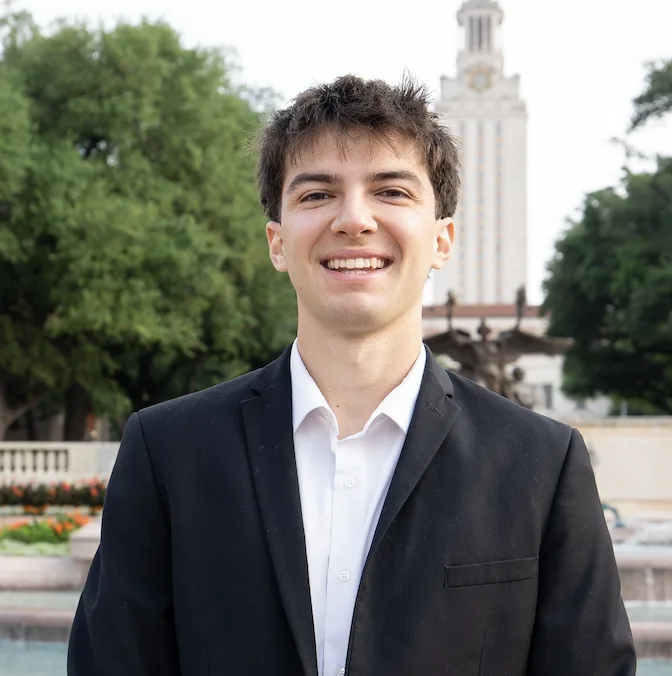
Our session format was a deliberate choice. Marketing Remix wasn't just a webinar with a twist. Pre-recorded sessions gave us polish and the flexibility to feature speakers across multiple time zones and tailor content for regional audiences. Our event host, Josh Brage, customer enablement specialist at Zoom, joined live as the connective thread between segments. That was a deliberate strategy: with Josh live, he could react to the chat in real time, respond to audience energy, and create genuine moments of human connection that pre-recorded content alone can't replicate. A fully live after-party promoting 2-way dialog between speakers and attendees for real connection and community, complete with a DJ closed the event. Zoom Events handles simulive and fully live sessions simultaneously, with no mode switch and no tool swap. That wasn't a workaround. It was the plan.
 
We designed our email cadence around how people actually register. Registration is front-loaded. Most conversions from any given email happen in the first 48 hours, not spread across the following week. A denser cadence beats a slow drip. And because our email tools lived inside the same platform as the event, we could see registration velocity in real time and adjust without exporting a single thing.
 
Our speakers carried some of the heavy lifting. One of the most successful pre-event promotions we ran came from the people already on our agenda. LinkedIn content from confirmed speakers reached an audience that already trusts the source. Zoom Events tracks registration by source, so we could see what was working and do more of it.

How Zoom Events performed during the live event

See every Zoom Webinar and Events feature

Four things defined how Marketing Remix ran on the day.
 
Backstage as our green room. The audience never sees it. We used Backstage to keep Josh synced between segments, giving him real-time visibility into live chat activity and active Q&A threads so he could stay present and responsive with the audience throughout the show. For a format where pre-recorded precision had to feel seamlessly connected by a live host, Backstage is what made that possible.
 
Simulive and live sessions let us pair polished pre-recorded content with Josh's live presence and a fully live afterparty, all in the same event, handled by the platform. Pre-recorded sessions delivered the precision. Josh and the afterparty delivered the energy. Attendees got both, and we never had to manage them as separate productions. Check out Zoom Webinars vs. Webinars Plus to see which production capabilities are available at each tier and best fit your needs.
 
Real-time engagement tools — Q&A, reactions, and chat — serve two purposes: they give attendees a reason to stay active, and they generate the behavioral data that makes post-event follow-up useful. Marketing Remix exceeded attendance goals by 16%, achieving a registration rate that outpaced our prior event benchmarks. That number was in the dashboard the moment the event closed.
 
Gamification turned participation into a moment. One of the highest-engagement spikes of the event wasn't a session — it was the Battle of the Band Names. We asked attendees to drop their best marketing-themed band name in the chat, and the response was immediate: "Panic at the Breakout Room." "The Bottom Funnel Boys." "Can You See My Screen." "Me, Myself, and AI." Dozens of entries flooded in across all regions. Beyond the energy it created, it demonstrated something our own webinar research backs up: well-timed, low-friction participation prompts are one of the most effective levers for spiking engagement, especially during natural lulls. We applied the same logic to polls throughout the event, using them not just as data collection, but as deliberate reset points to re-engage attention between segments.
 
Production Studio handled branded overlays, lower thirds, and transitions natively: broadcast-quality visuals without a production agency, and without a second operator. For an event running live across five regions, that consistency mattered. One person, one platform, professional output at every session.


How Zoom analytics and post-event insights drove pipeline

Most teams walk out of a virtual event with two files: a registrant list and an attendee list. Every question asked, every session attended, every reaction fired, all flattened into a spreadsheet with no context attached.
 
We've been on the other side of that handoff. It's not great.
 
Post-event, the team used the platform's analytics dashboard and AI Content Generation feature to segment attendees by topic interest and generate personalized follow-up content, without standing up any additional infrastructure.
 
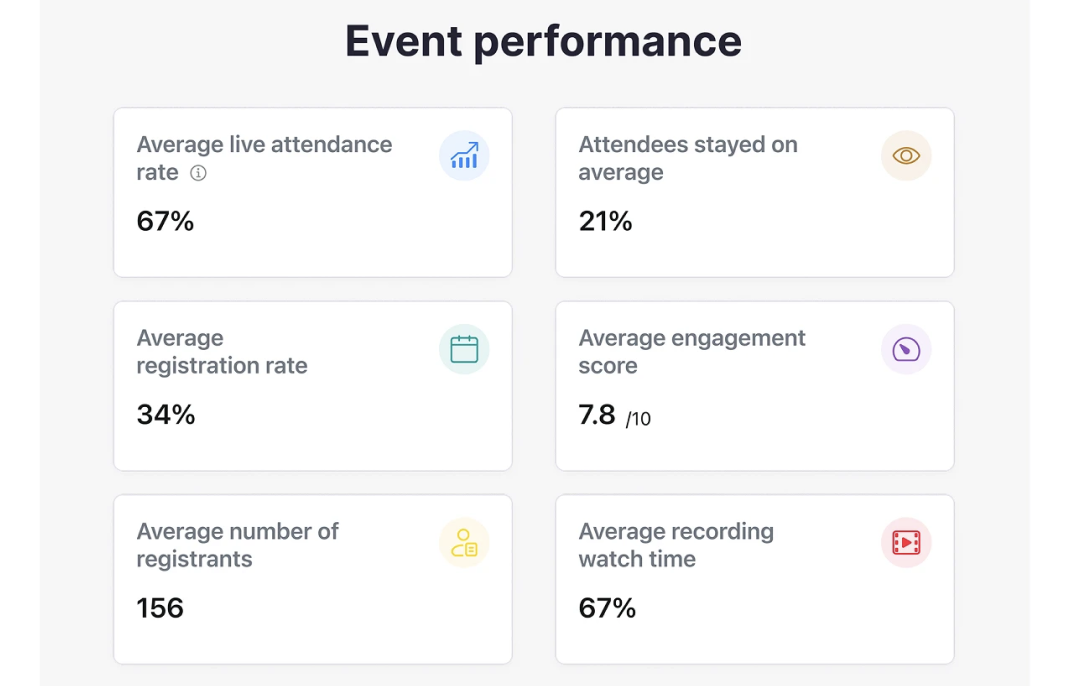
The Summary tab gave us three numbers immediately: registration rate, live attendance rate, and a composite engagement score from 0 to 10, benchmarked against our full event history. We knew within minutes whether the event over- or underperformed and exactly which metric moved.
 
The Engagement tab gave us individual attendee profiles: time on session, questions asked, topics of interest auto-tagged from Q&A language. That context is what made follow-up land. An attendee who stayed 40 minutes and asked pointed questions about a specific topic gets routed to the SDR team with that signal attached, not dropped into a generic sequence.
 
AI Content Generation took that data further. It combed session transcripts, cross-referenced attendee engagement, and automatically created follow-up email drafts segmented by topic interest. The team can review and polish content before sending,, but the lift of writing individualized emails from scratch was gone. For more on connecting event performance to pipeline, see measuring webinar ROI and impact.
 
The value of that signal became clear in the event itself. In the Metadata session, James Silvestri shared that 23% of their closed deals were influenced by virtual events, with a close rate 2.5x higher than other channels, a result that starts with capturing the right behavioral data in the platform.
 
Example numbers of how analytics are displayed

How we repurposed our webinar content after Marketing Remix

The live energy faded, but the recordings, transcripts, and clips inside Zoom Events didn't.
 
We matched the content format to what the live sessions delivered. Data-heavy sessions translated well into written content: blog posts, how-to guides, and structured articles. Conversations and panel moments became short clips. Transcripts were published as crawlable text, extending organic reach and surfacing content on AI-powered discovery platforms long after the event ends.
 
Zoom Clips gave the content team a fast path from raw recording to publishable clip, with no separate editing tool required. Trim, package, and distribute directly from the platform. One well-produced multi-session event, like Marketing Remix, treated as a system, can carry the content calendar for a full quarter. For a repurposing framework that scales, see virtual and hybrid event best practices.

What we walked out with

Marketing Remix was a deliberate test: could a team plan, run, and extract real pipeline value from a professional multi-session virtual event across five regions without leaving the platform?
 
We came in with a hypothesis. We walked out with a playbook.
 
One platform. Every phase. The engagement signals built throughout, across Q&A activity, poll responses, chat behavior, session duration, and after-party attendance came together at the end into a clear picture of who was ready for the next conversation.

See how Zoom Events can power your next event

Related Resources and FAQs

  • Your ultimate guide to planning and hosting virtual events
  • Beyond registrations: measuring webinar ROI and impact
  • 42 webinar statistics businesses should know in 2026
  • How to host a webinar: best practices and recommendations
  • Zoom Webinars vs. Webinars Plus: which is right for you?

    What are Zoom Webinars and Events?
     
    Zoom Webinars and Events is a virtual event platform that enables organizations to plan, host, and analyze professional virtual events of any size, from single-session webinars to multi-day, multi-track programs with thousands of registrants. The platform includes registration management, branded event hubs, live and simulive session support, real-time engagement tools, and post-event analytics in one environment. For teams running virtual events as a demand generation or community-building channel, a fully integrated platform removes the overhead of managing separate tools for email, production, and reporting. It is available as part of the Zoom Workplace platform, with tiers including Webinars, Webinars Plus, and Zoom Events to match different program scales and production requirements.


    How do you measure virtual event ROI with Zoom Event analytics? 

     
    Measuring virtual event ROI starts with moving past registration and attendance counts into behavioral data. The most reliable signals are session duration, Q&A participation, reaction activity, and a composite engagement score that rolls all of those together per attendee. These metrics show who was genuinely engaged versus who opened the tab and walked away, which is the segmentation that helps sales teams prioritize outreach. Cross-event benchmarking adds a second layer by comparing each event's performance against your full history. Connecting that behavioral data directly to CRM pipeline, routing per-attendee topic signals to SDRs rather than a flat CSV, is what turns a virtual event from a brand channel into a revenue motion.
     
    What is an engagement score in webinars, and why does it matter?
     
    An engagement score in webinars is a composite metric that combines multiple behavioral signals — session duration, Q&A participation, reactions, chat activity — into a single number per attendee, typically scaled 0 to 10. It reflects the quality of attention, not just the fact that someone showed up.
    For sales teams, it works as a prioritization filter: highest scorers get immediate outreach, mid-range scores get reviewed for topic context before follow-up, and low scorers route into a lighter nurture sequence. It replaces the default of treating every attendee identically regardless of how they actually engaged.

Our customers love us

Okta
Nasdaq
Rakuten
Logitech
Western Union
Autodesk
Dropbox
Okta
Nasdaq
Rakuten
Logitech
Western Union
Autodesk
Dropbox

Zoom - One Platform to Connect