What is a virtual events platform?
A virtual events platform is software that enables organizations to plan, host, and manage live or on-demand events for distributed audiences online. It typically combines video streaming, attendee registration, engagement tools — such as Q&A, polls, and chat — and post-event analytics into a single production environment. The defining characteristic of a full-featured platform, as distinct from a basic video conferencing tool, is its ability to manage the complete event lifecycle: from pre-event registration and communications to live production and post-event content distribution.
For marketing organizations, the most important distinction is between platforms designed for broadcast delivery and those designed for demand generation. Demand generation platforms integrate first-party behavioral data — session attendance, content interactions, networking activity — directly into CRM and marketing automation workflows, enabling attribution and follow-up at scale.
How does Zoom Events support virtual event management for marketing teams?
Zoom Events is designed for marketing teams that need to produce professional virtual and hybrid events without managing multiple disconnected vendors. It covers the full event lifecycle: branded event hubs handle registration and ticketing; Production Studio and Backstage support broadcast-quality live sessions; networking lounges give attendees structured ways to connect; and post-event content workflows designed to extend the value of every event into on-demand libraries and follow-up programs.
For teams running high-volume webinar programs alongside flagship events, Zoom Webinars and Zoom Webinars Plus extend the platform to cover the full spectrum of marketing event formats — from weekly demand gen webinars to annual customer summits — under a single vendor relationship. AI-assisted tools within the platform help teams produce content faster, including session summaries and event imagery, with human review embedded into each workflow rather than treated as optional.
What is the IDC MarketScape, and why does it matter for platform evaluation?
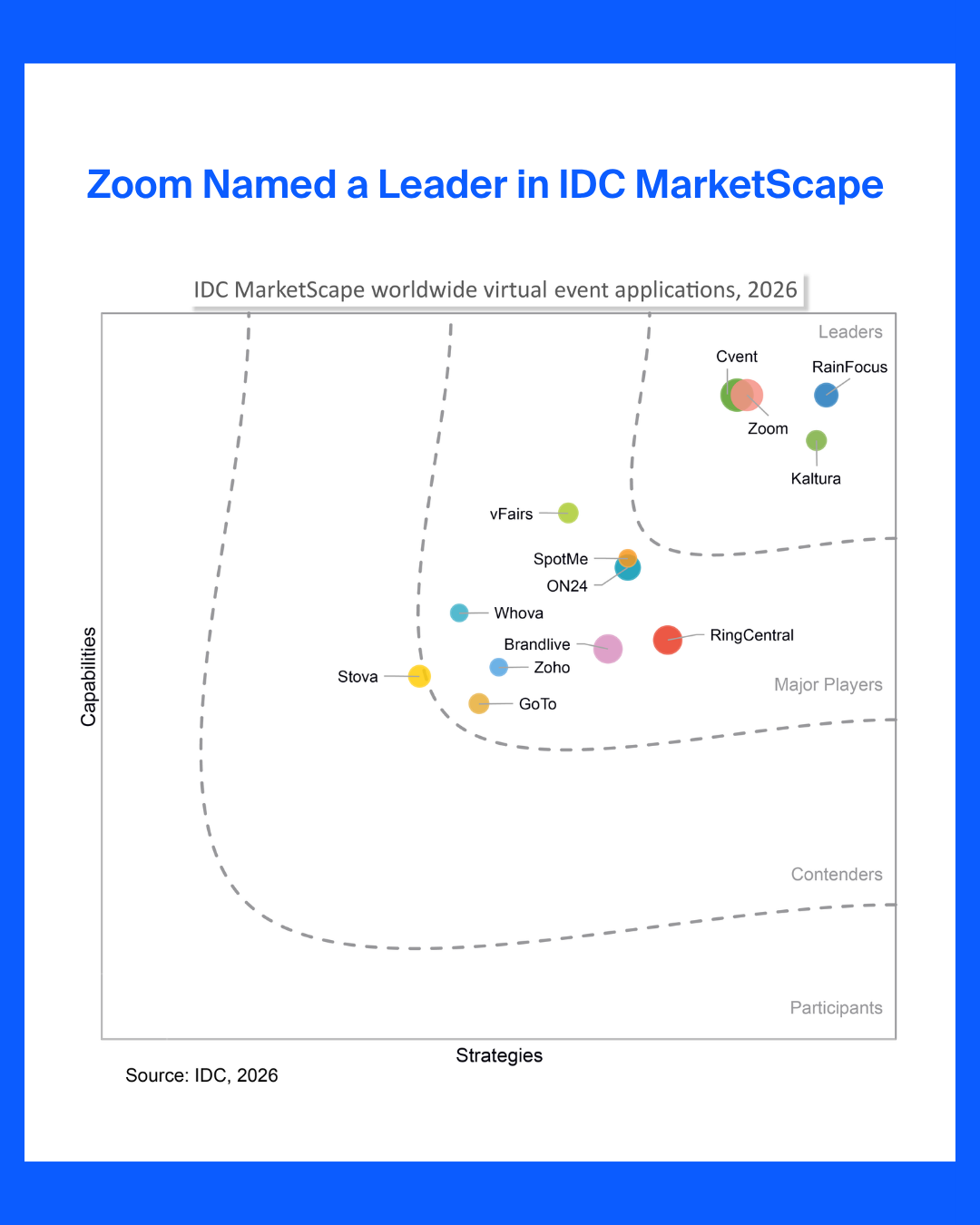
The IDC MarketScape is an independent vendor assessment framework published by IDC (International Data Corporation), a global market intelligence and advisory firm. Each assessment evaluates vendors across two dimensions — capabilities and strategy — and places them in one of four categories: Leaders, Major Players, Contenders, or Participants. The framework is designed to help technology buyers make informed vendor selection decisions by providing third-party, criteria-based analysis rather than vendor self-reporting.
For organizations evaluating virtual events platforms, an IDC MarketScape assessment provides a structured, independent view of how vendors compare across specific functional dimensions — including CRM integration quality, AI capability depth, analytics maturity, and hybrid event support. It is a useful complement to internal evaluations, proof-of-concept testing, and peer references when building a shortlist.
How does virtual event software differ from webinar software?
Virtual event software and webinar software serve different production needs, though the categories increasingly overlap. Webinar software is designed for one-to-many broadcast presentations: a presenter or panel delivers structured content to a large audience with limited two-way interaction. It prioritizes ease of setup, registration management, and recording delivery.
Virtual event software covers a broader scope. It supports multi-session agendas, concurrent tracks, networking lounges, expo floors, and sponsor management — more closely replicating the structure of a physical conference in a digital environment. The most capable platforms handle both formats: a single-session product webinar and a three-day virtual conference with 50 concurrent sessions and 10,000 attendees. For marketing teams with diverse event calendars, a platform that covers both use cases from a single production environment can reduce vendor complexity and create a more consistent attendee data model across programs.



 5 min read