By audience
Small and midsize businessEnterprise
Information TechnologyCustomer ExperienceSales and RevenueFacilitiesMarketing and EventsPublished on July 17, 2026
If you run a small business, you already know: when the phone rings and nobody answers, that caller probably isn't leaving a voicemail. They're calling the next name on the list.
An AI receptionist changes that. Instead of voicemail or hold music, your callers get a natural, conversational voice that answers questions, books appointments, captures details, and routes calls to the right person — 24 hours a day, 7 days a week. No phone trees. No missed opportunities.
But what does that actually look like for your industry? Below, we break down how Zoom Virtual Agent Receptionist works across eight verticals — with example scenarios and sample greetings you can adapt for your own business.
A dental or healthcare office can use an AI receptionist to answer patient calls after hours, book and confirm appointments, and verify insurance information — without pulling front-desk staff away from in-office patients.
Front-desk teams at clinics and dental offices are pulled in a dozen directions at once — checking patients in, verifying coverage, handling paperwork. When the phone rings during a rush, it often goes to voicemail. And patients rarely call back.
An AI receptionist handles the calls your team can't get to. It answers questions about hours, accepted insurance, and available services. It books, confirms, or reschedules appointments. And when a call is urgent, it routes directly to the right team member with full context — so the patient doesn't have to repeat themselves.
Example scenario: A patient calls your dental office at 7:30 p.m. to ask whether you accept their insurance and book a cleaning. The AI receptionist confirms coverage, finds the next available slot, books the appointment, and sends a text confirmation with prep instructions — even though the office is closed.
Compliance note: For healthcare practices, Zoom's AI receptionist can be configured to avoid collecting sensitive patient information on the call, routing sensitive requests to a staff member directly.
A law firm can use an AI receptionist to capture prospective client inquiries after hours, collect caller intake details, and schedule consultations — so no lead is lost to voicemail.
Attorneys spend most of their day in meetings, depositions, or focused work. They can't always answer the phone — but prospective clients who reach voicemail rarely leave a message.
Your AI receptionist greets callers professionally, collects basic intake information (name, case type, preferred callback time). After hours, it captures leads so nothing falls through the cracks overnight.
Example scenario: A potential client calls your firm at 6:15 p.m. about a contract dispute. The AI receptionist gathers their name, a brief description of the issue, and their availability — then schedules a consultation with an attorney for the next morning and sends a confirmation text.
Sample greeting:
"Thank you for calling [Firm Name]. If you're a new client, I can help you schedule a free consultation. If you're an existing client, I can connect you with your attorney. Which would you prefer?"
A financial services firm can use an AI receptionist to field new client inquiries, route existing clients to their advisor by name, and capture leads during peak periods like tax season — when every line is busy.
Whether you're an independent advisor, an insurance agency, or a small accounting firm, your clients expect responsiveness. But during busy seasons — tax deadlines, open enrollment, quarterly reviews — call volume spikes and your team is maxed out. New prospects who can't get through often don't try again.
An AI receptionist answers each call with a professional tone that matches your brand. For new callers, it collects intake information (what service they need, their timeline, how they heard about you) and books an introductory meeting. For existing clients, it routes them to their advisor by name — avoiding hold queues and transfers to the wrong person.
Example scenario: During tax season, a new prospect calls your accounting firm asking about business tax preparation services. Your team is fully booked with client meetings. The AI receptionist explains your service offerings, collects the prospect's business type and revenue range, and schedules a 30-minute discovery call for the following week — then texts them a confirmation with a link to your intake form.
Sample greeting:
"Hi, you've reached [Company Name]. Are you an existing client looking to reach your advisor, or are you interested in learning about our services? I can help either way."
A real estate agency can use an AI receptionist to field property inquiries around the clock, qualify buyer leads, and book showings — even when every agent is out on appointments.
Agents are constantly showing properties, driving between appointments, and negotiating deals. Missed calls from buyers or sellers can mean lost listings and lost commissions — especially on hot properties where speed matters.
Your AI receptionist fields property inquiries, provides listing details, qualifies leads by asking about budget and timeline, and quickly routes buyers to the right agent based on the information requested. After hours, it captures every lead so your team can follow up first thing in the morning.
Example scenario: A buyer calls at 8 p.m. asking about a property they saw online. The AI receptionist shares key details (price, square footage, open house schedule), collects their contact info and budget range, and books a showing for the next day.
Sample greeting:
"Thanks for calling [Agency Name]. I can pull up details on any of our listings, schedule a showing, or connect you with an agent directly. What are you looking for?"
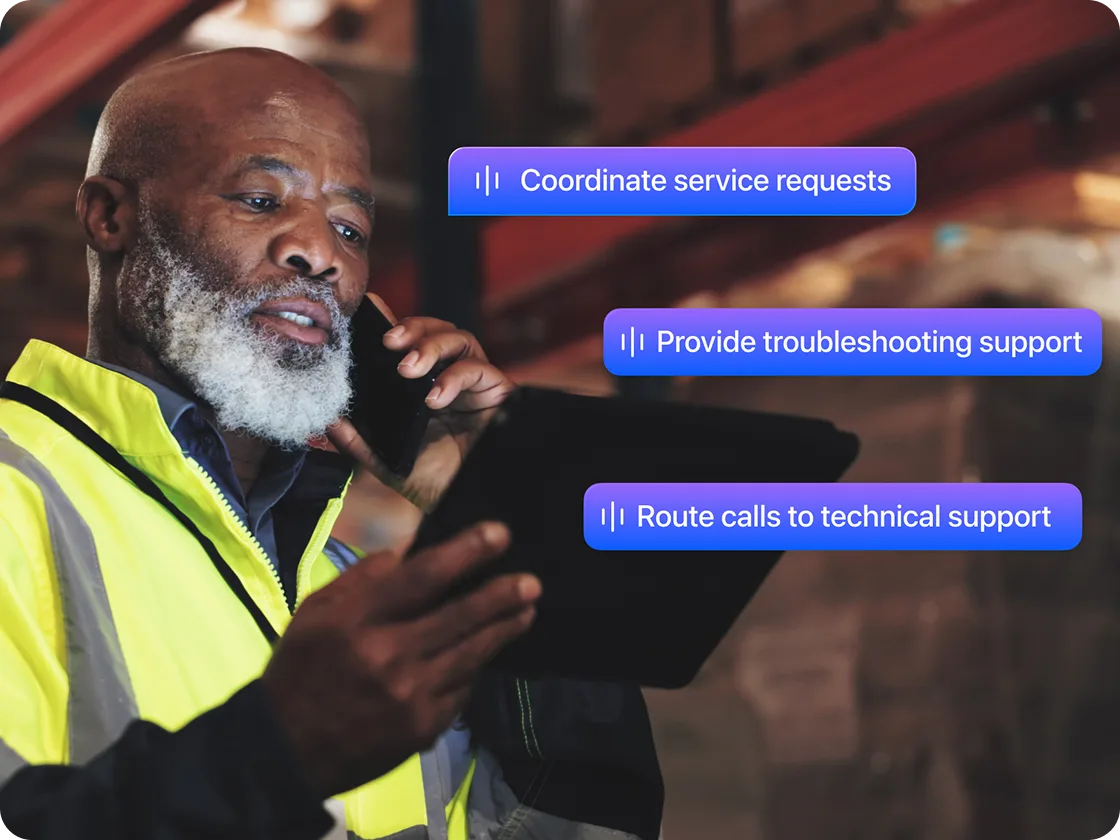
An auto repair shop or home services business can use an AI receptionist to book service appointments, provide estimates, and route time-sensitive calls to the on-call technician — even when the team is on the job.
When your technicians are under a car or on a job site, nobody's answering the phone. Customers with urgent needs — a broken furnace, a check-engine light, a leaking pipe — won't wait. They'll call the next shop on the list.
An AI receptionist handles service inquiries, provides estimates for common jobs, books appointments, and routes urgent calls to the on-call tech. It can also send follow-up texts with appointment confirmations and directions to your shop.
Example scenario: A customer calls your auto repair shop asking about brake pad replacement. The AI receptionist provides a price range, checks your schedule for availability, books them in for Thursday morning, and texts a confirmation with your shop address.
Sample greeting:
"Hey, thanks for calling [Shop Name]. If this is an emergency, just say 'urgent' and I'll get you to a technician right away. Otherwise, I can help with pricing or scheduling. What's going on?"
A restaurant can use an AI receptionist to take reservations, answer menu questions, and handle event inquiries by phone — so front-of-house staff can stay focused on guests in the dining room.
During lunch and dinner rushes, your staff is focused on the guests already seated — not the ringing phone. But those calls are often reservations, takeout orders, or event inquiries that drive revenue.
Here's how the flow works differently from a traditional setup:
|
|
Before AI receptionist |
With AI receptionist |
|---|---|---|
|
Busy hours |
Phone rings unanswered or goes to voicemail |
Every call answered quickly |
|
Reservations |
Host stops seating guests to take the call |
AI books the table and texts confirmation while on the call |
|
Menu questions |
Staff interrupted mid-service |
AI answers from your FAQ automatically |
|
Event inquiries |
Caller leaves a message; follow-up delayed |
AI captures details and routes to right team member |
Sample greeting:
"Thanks for calling [Restaurant Name]! Looking to make a reservation, place a takeout order, or ask about our menu? I've got you covered."
Sample greeting:
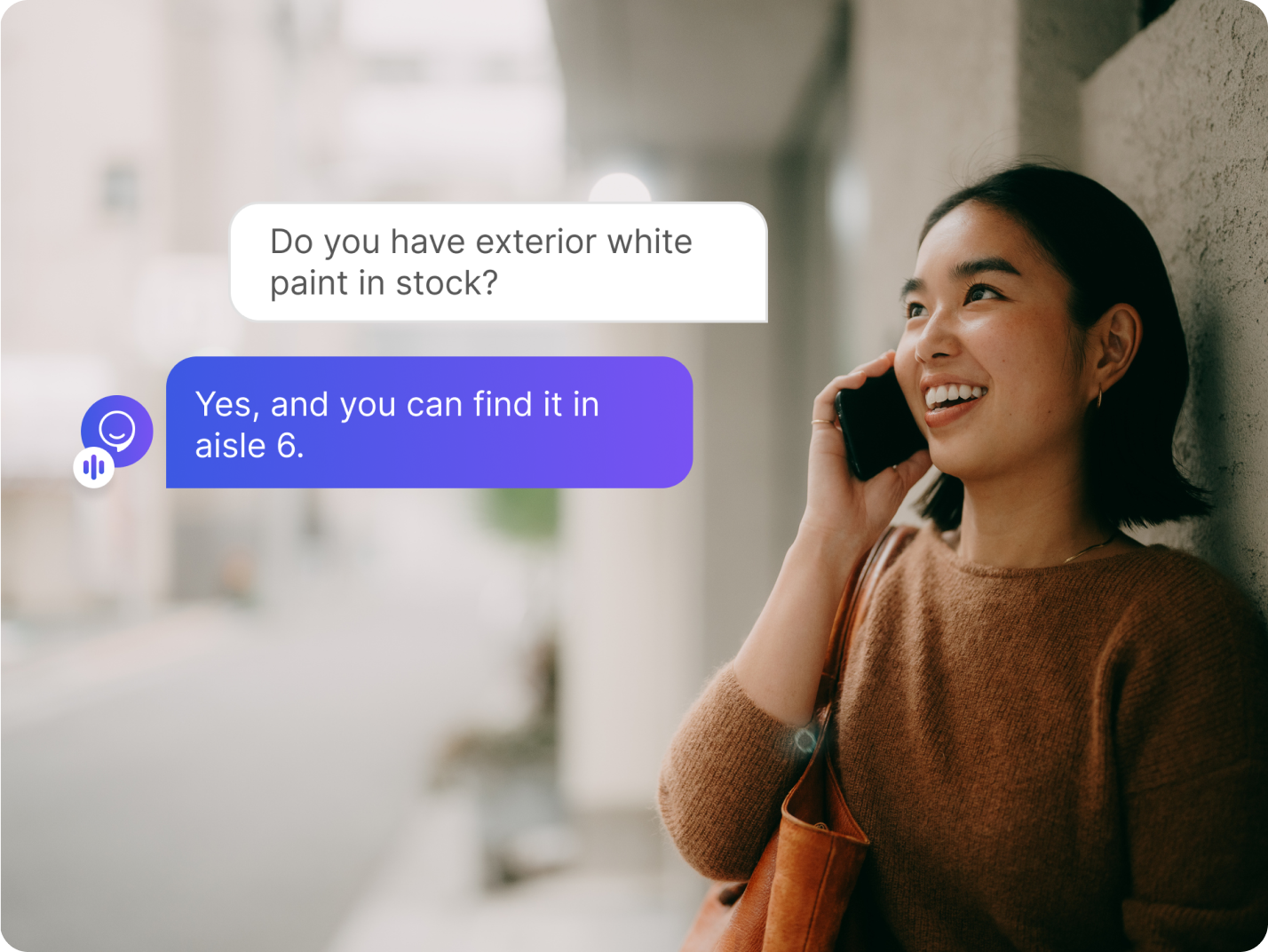
"Hi there! You've reached [Store Name]. I can check product availability, answer questions about returns or hours, or get a team member on the line. What do you need?"
A hotel or property management company can use an AI receptionist to provide guest information around the clock, handle maintenance requests, and keep calls covered — even overnight or during check-in/check-out rushes.
Guests and tenants expect immediate answers — check-in times, parking details, Wi-Fi passwords, maintenance requests. But front-desk teams can't always pick up, especially overnight or during check-in/check-out rushes.
An AI receptionist handles these routine calls instantly. It provides property details, logs maintenance requests and routes them to the right team, and answers common questions without waking up your night staff.
Example scenario: A tenant in unit 4B calls at 6 a.m. reporting a leaking faucet. The AI receptionist logs the issue, confirms the unit number and urgency, texts the tenant a confirmation with a ticket number, and routes the request to your maintenance team's on-call queue — before anyone in the office has clocked in.
Sample greeting:
"Welcome to [Property Name]. I can help with check-in details, directions, amenities, or maintenance requests. How can I assist you?"
|
|
AI Receptionist |
Traditional Receptionist |
Voicemail Only |
|---|---|---|---|
|
Availability |
24/7/365 |
Business hours only |
24/7 (but no one answers) |
|
Simultaneous calls |
Multiple |
1 at a time |
N/A |
|
Monthly cost |
Starting at $0.30 a minute* |
Salary |
Free |
|
Setup time |
Minutes |
Weeks (onboarding + training) |
None |
|
Languages supported |
10+ |
Depends on hire |
N/A |
|
Captures lead info |
✅ Automatically |
✅ Manually |
❌ Rarely |
|
Books appointments |
✅ |
✅ |
❌ |