How one of the world's most iconic concert halls turned busy signals into a seamless customer experience with Zoom

The Elbphilharmonie, one of the world's most architecturally celebrated concert halls, unified its communications — from business telephony to its ticket hotline to mobile collaboration — on the Zoom platform. The outcome: approximately 87% less administrative overhead, just 3 outages in 4 years, and scalability that handles thousands of simultaneous callers during high-demand ticket launches.

Elbphilharmonie
Elbphilharmonie
Customer:

Elbphilharmonie Hamburg

Industry:

Arts & culture / Public sector

Location:

Hamburg, Germany

Size:

272 employees

Zoom products:

Zoom Phone (263 users), Zoom Contact Center (23 agents, 4 supervisors), Zoom Workplace (Meetings, Chat), Zoom AI

Challenge:

Highly complex legacy PBX running on roughly 10 virtual servers, no scalability during demand peaks, limited support for mobile collaboration

Results:

Administration reduced from 2 hours to 15 minutes per week; just 3 outages in 4 years compared to one every 2–3 months; every caller now reaches the contact center — even during ticket launches with 80,000+ calls

When a major ticket launch opens at the Elbphilharmonie in Hamburg — one of the most sought-after concert venues in the world — thousands of people pick up the phone at the same moment. In years past, more than 80,000 of those calls might hit the switchboard in a single launch window. And most of them ended with a busy signal. The legacy phone system simply wasn't built for that kind of surge.


Today, the picture looks different. Since the Elbphilharmonie migrated its communications onto the Zoom platform, callers no longer get turned away — even during high-demand ticket launches. Getting there started with a fundamental question: how do you replace a telephony infrastructure that has grown and accumulated features for decades, without losing the capabilities that still matter?

About the Elbphilharmonie

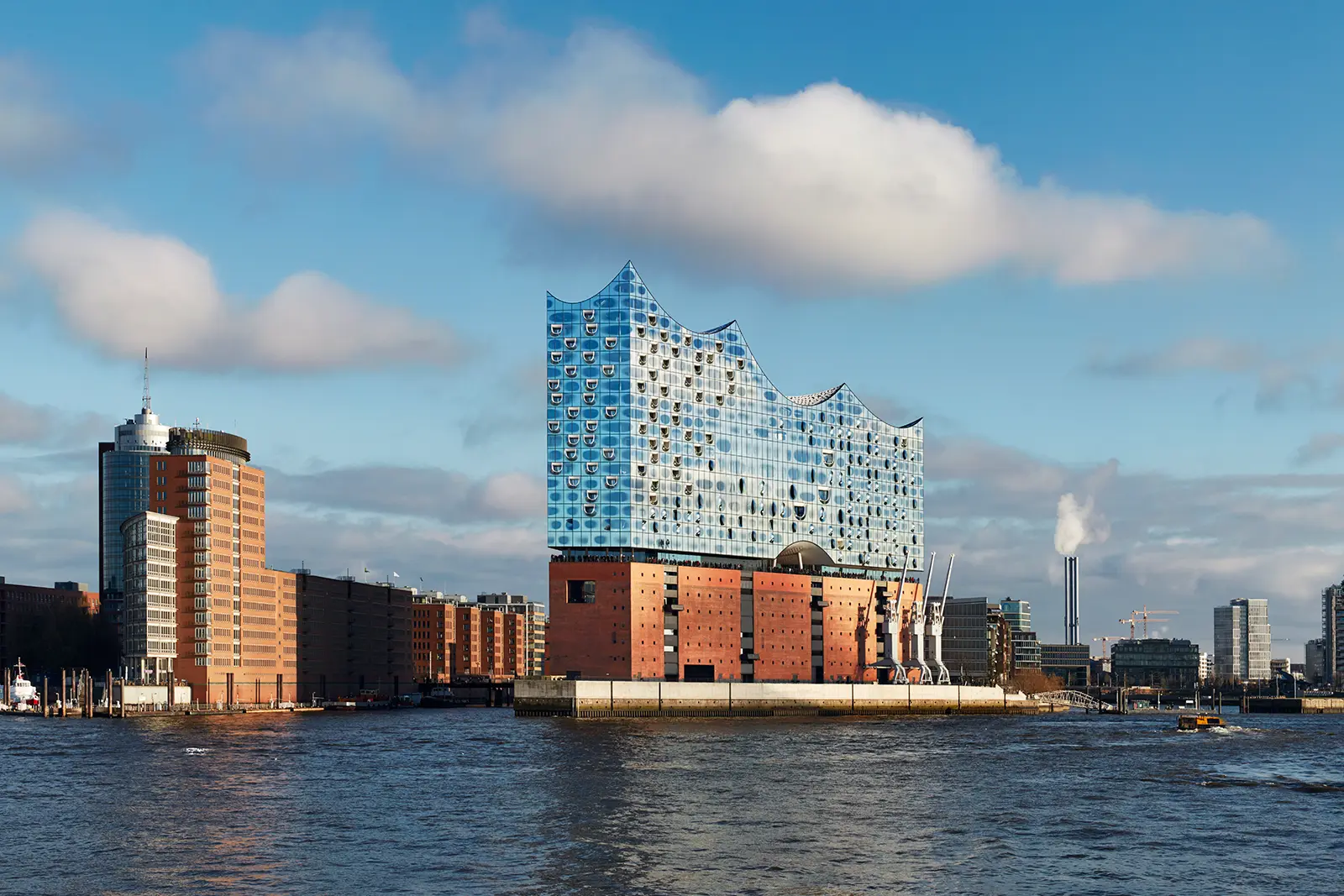
Opened in 2017 and designed by the architects Herzog & de Meuron, the Elbphilharmonie has become one of the most recognizable concert halls in the world. Its silhouette — a wave of glass rising above a former warehouse in Hamburg's HafenCity — draws visitors and audiences from across the globe.


The building hosts hundreds of classical, jazz, world music, and contemporary performances each year. For many of them, tickets sell out in minutes. That demand makes service accessibility not just a customer-experience goal, but a fundamental part of how the institution operates.

The challenge

For years, the Elbphilharmonie ran a virtualized PBX system from a well-established vendor. The setup spanned roughly 10 virtual servers and covered an unusually wide range of use cases: business telephony, a call center, a fax server, IP-to-analog converters, audio conferencing, and integrations between internal extensions and mobile phones. "There was almost nothing we couldn't make possible with that system," said Ingo Främbs, deputy head of IT at the Elbphilharmonie.


But that breadth came with a cost. The system had grown so complex that no one on the internal IT team could fully administer it. Even one of Germany's leading integrators depended on the availability of specific specialists. Främbs and his team spent around 2 hours a week just on routine administration — and that didn't account for outages, which occurred every 2 to 3 months and ranged from individual service failures to a complete contact center shutdown. Each incident carried real consequences for customers, employees, and the IT team's workload.


The friction showed most clearly during ticket launches. When thousands of callers tried to reach the hotline at the same time, the PBX couldn't keep up. For a venue that aims to deliver world-class service, a busy signal wasn't an acceptable answer.


The Elbphilharmonie also needed better mobile collaboration. More than 250 employees needed to work flexibly from the office and on the go, and leadership wanted to maintain close contact with teams regardless of where they worked. The existing infrastructure was built for stationary office work and couldn't support hybrid operations.

The proof of concept: skepticism meets a new approach

In November 2021, the Elbphilharmonie began evaluating a new PBX. The IT team started with a detailed sheet of required features and performance data, classified the most important capabilities, and wrote what they called a "cookbook" for a proof of concept. After a round of remote product demos, two vendors remained for a live POC.


Främbs went into that phase with a clear expectation: he wanted to measure Zoom against a requirements document that had been built from daily challenges — hundreds of individual features, plus new collaboration capabilities.


The results surprised him. About 30% of the requirements came back with a clear match. For the rest, Zoom had a consistent answer: "We have a different solution for that." Främbs realized Zoom hadn't set out to reproduce a PBX feature-for-feature. The company had designed business telephony for a cloud-first, platform-based world.


The POC itself ran for about 4 months, with close support from Zoom's technical specialists in Germany and the United States. The Elbphilharmonie IT team was able to rebuild and validate its full requirements using trial licenses. Zoom Phone went live in June 2022. Zoom Contact Center followed a year later.

Zoom Phone: business telephony, radically simplified

With Zoom Phone, the Elbphilharmonie replaced its entire PBX infrastructure — 10 virtual servers consolidated onto a single cloud platform. Today, most of the employees use Zoom Phone as a softphone, complemented by 36 desk phones where physical hardware still makes sense.


The administrative gains showed up immediately. Single sign-on integration automatically provisions new users, assigns licenses, and creates contact groups. Service requests that used to require external specialists are now handled by the in-house help desk.

Zoom Contact Center: every call gets an answer

For the ticket and subscription hotline, the Elbphilharmonie relies on Zoom Contact Center. The team doesn't just handle inbound calls — they also cover in-person sales and email inquiries. Supervisors use Zoom Contact Center to manage who works which channel at any given time, giving the operation the flexibility a small, multi-skilled team needs.


The call flow was built with precision. Callers first choose their language, and a script then checks the incoming number against the CRM. Known customers are identified automatically, and agents see relevant context — including whether a caller is a VIP — before they pick up. When wait times get long, callers can request a callback or listen to recorded information that answers the most common questions.


The real difference shows during demand peaks. "A ticket launch used to bring in more than 80,000 calls," Främbs said. "No team on earth can take that many calls personally. But with Zoom Contact Center, every caller gets a response. Many find their answer in a recorded message, others choose a callback, and the ones who really need to speak with an agent arrive better qualified."


Because the agent team is small and handles multiple channels, the Elbphilharmonie doesn't measure success with classic contact center KPIs.

Zoom Professional Services guided the implementation. The team helped design the call flow, handled documentation, and for requirements that hadn't yet been optimized for the European market, worked directly with Zoom's development teams in the United States. Changes were added to active sprints. Porting the existing contact center numbers was also smoother because of the close connection with Zoom's internal teams.

Zoom Workplace: mobile collaboration for every employee

Every employee at the Elbphilharmonie gets a Zoom account to join meetings. With Zoom Workplace — Meetings, Chat, and the mobile app — the organization can now support hybrid work in ways the old infrastructure simply couldn't. Department heads stay connected with their teams through video and chat, and leadership maintains a close working relationship with staff even when people are distributed.

Security and compliance: built for the European context

The Elbphilharmonie's data is stored in data centers in Germany and elsewhere in the European Union. Administrators can configure precisely where certain features like transcription are processed, and whether recordings stay local or reside inZoom's infrastructure. After review, the Elbphilharmonie's external data protection officer and its information security lead approved the rollout with minimal adjustments — the main requirement was a standard data protection notice in external meeting invitations. The role and permissions model, along with flexible retention settings, also satisfied employee representatives.


For other organizations operating in regulated industries or the public sector, this kind of configurability matters — especially when national data residency requirements intersect with cross-border collaboration.

The results

  • Approximately 87% less administrative overhead. From roughly 2 hours per week down to about 15 minutes. The time that used to go into maintaining the old PBX now goes into other IT projects.
  • Dramatically better system stability. Just 3 short outages in 4 years of Zoom operation, compared to outages every 2 to 3 months with the previous infrastructure.
  • Scalability through intelligent call routing. Even during high-volume ticket launches, no caller hits a busy signal. Self-service announcements resolve the most common questions, a callback option is always available, and agents can focus on the cases where human contact makes the real difference.
  • Independent administration. The in-house help desk can now provision users, assign licenses, and resolve service requests without depending on external specialists.
  • CRM integration in the contact center. Agents see relevant customer context the moment a call connects, and can capture information for reporting, analysis, and follow-up.
  • EU data residency. Data is processed in data centers within Germany and the European Union — reviewed and approved by the Elbphilharmonie's data protection officer and information security lead.

Looking ahead

The Elbphilharmonie has its eye on the next step with AI . The IT team sees real potential in being able to pull action items automatically from calls, meetings, and chats. "Being able to ask the AI what tasks came out of my last three calls or yesterday's meeting makes my work noticeably more efficient," Främbs said.


Looking back on the journey, Främbs points to Zoom's responsiveness as one of the partnership's defining qualities. Bugs and feature requests get addressed quickly. The result is a communications platform that scales with one of Europe's most demanding cultural institutions and, when the moment calls for it, can support thousands of simultaneous calls and minimize missed customer opportunities.

Learn how the Zoom platform can support telephony, customer engagement, and collaboration in your organization.

Talk to our team — we'll show you what Zoom Contact Center, Zoom Phone, and Zoom Workplace can do for you.