
Your guide to getting started with ZoomMate
Everything you need to start using ZoomMate: notes, search, workflows, and AI tools — all inside Zoom Workplace.
Lessons from the Zoom EMEA Customer Council Forum with Jim Lawless
 9 min read
Published on July 17, 2026
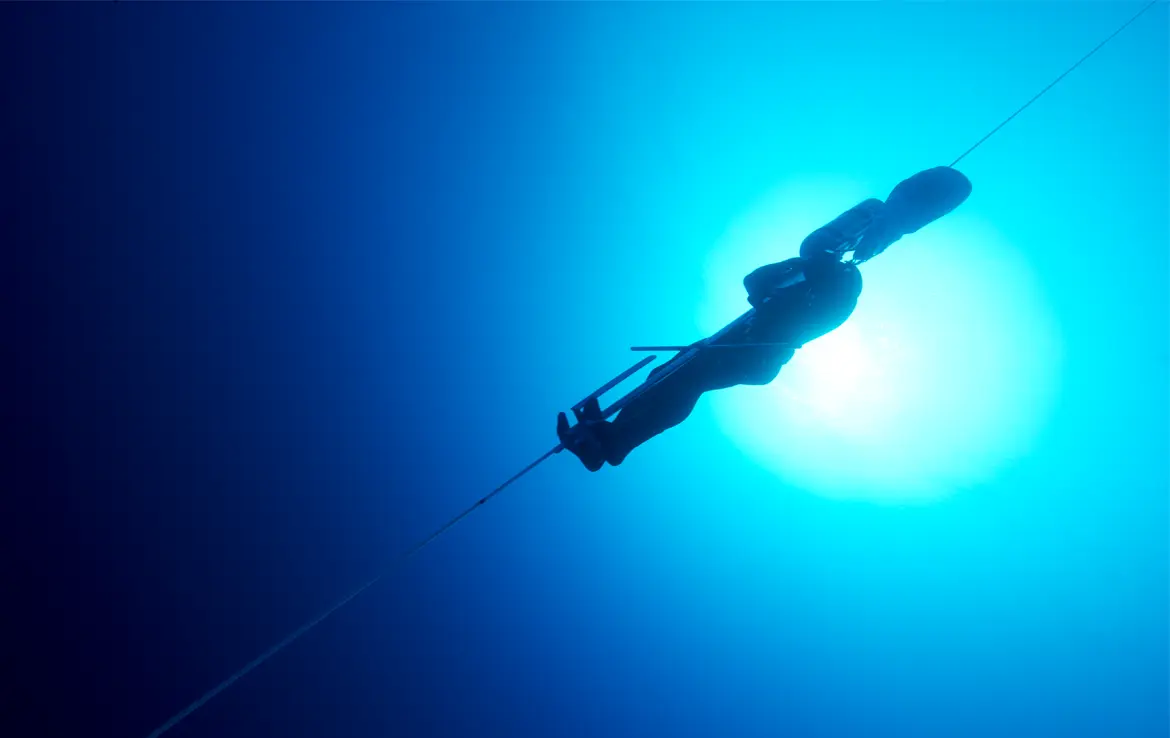



What does holding your breath at 101 metres below the ocean's surface have in common with leading a global technology transformation? More than you might think. At the most recent Zoom EMEA Customer Council Forum, Benedetto Conversano, former global CIO turned Zoom executive, sat down with Jim Lawless, CEO advisor and British freedive record holder, for a conversation about speed, courage, and leadership as AI reshapes how work gets done.
Here's what emerged, and why every technology leader should pay attention.
Jim Lawless came to freediving in his 40s. He wasn't sporty. He was a father running a business. Everything about his story said "people like me don't do things like that." And yet, he went from a 40-second breath hold to five minutes, from recreational depths to a national record.
The secret? Architecture.
"Beyond 40 or 50 metres, you can't rescue the situation by heroics. There's going to be a number of pre-taken decisions, even in the case of an emergency, which you're going to have to stay utterly serenely calm and take."
This is the parallel Jim draws with business. Organisations that rely on heroic leaders, brilliant individuals who solve every problem personally, are organisations that cannot scale their speed. The question isn't whether your CIO is the best technologist in the building. It's whether they've built an organisation that can operate without them in the room.
Jim's diagnosis is sharp and uncomfortable. In a knowledge economy, the unit of transformation is the human being, rather than process or machines. And humans, by nature, optimise for yesterday.
We gather data from the past. We wrap it in a story ("the regulator won't allow it," "the CEO doesn't like that approach," " think I'll escalate that decision to the exec"). That story drives an emotion. And that emotion drives our action, which is almost always one of three things:
The result? Slowness dressed up as diligence. Caution masquerading as professionalism. And calendars full of meetings where no one makes a decision.
Jim's alternative is simple and fast. Instead of Story → Emotion → Action → Result, he proposes the DARE loop:
Decision → Action → Result → Evaluate
Start with the result you want. Work backwards to the actions required. Make a decision: will you commit to those actions? Then evaluate fast and loop again. It's iterative, it forces clarity, and it moves.
When Jim wanted to break the freedive record, the "story" said it was impossible for someone his age, schedule and lack of training. Starting from the result, 101 metres, and working backwards to the actions (find the world's best coach, redesign the calendar, train daily) changed everything. He approached Andrea Zucari, who went on to become the second deepest freediver in human history. The response? Intrigue and support.
"The more senior you go, the more outrageous it feels to call that person. But the more senior, the more likely they are to at least offer advice, if not engage."
One of the forum's most striking moments came when Jim described looking at clients' Outlook calendars after agreeing on ambitious strategic goals. The finding? Zero room for any of the actions they'd just committed to. Everything was consumed by check-ins, permissions, escalations, and congregating.
Jim frames change across four dimensions: Mindset (believe it's possible), Skill Set (learn what's needed), Relationships (renegotiate expectations), and Calendar (where the future is actually designed).
He invokes Eliud Kipchoge, the greatest marathon runner in history, whose secret to success is "Vitamin N": the ability to say no. Nike sponsors him, but they only get access in a hotel room the day after a race. Everything else is protected time for the actions that deliver results.
"The calendar is the draftsman's board. It's where you design the future."
Jim was stuck at 50 metres. Psychologically frozen. His approach was drive, determination, aggression. "The old method." Freediving at depth requires the opposite: fluid serenity, a communion with the ocean. More of the same, harder, wasn't going to get him there.
The breakthrough came through music. Jim installed a track as an earworm, listening constantly during preparation, running, driving. He imagined the core of the dive as copper wire, with the music insulating him from stress and tension. Within weeks, he was moving through 70, 80 metres, and the record was within reach.
The business lesson is clear: when you're stuck at your current performance ceiling, you need to find your equivalent of the music. The mechanism that overrides the limiting story and lets you operate from a fundamentally different place.
Perhaps Jim's most provocative observation: the most parent-child dynamics he encounters aren't between managers and their teams. They're in the C-suite itself.
He shared the example of a global technology company that wanted to move "from NASA to SpaceX": same innovation DNA, radically higher speed. The problem? Everyone was second-guessing what "daddy" wanted. The entire organisation was optimised to seek permission rather than take action.
The antidote is courage. Specifically, the courage to have adult-to-adult conversations with the CEO. To say: "Here's what the strategy demands. Here's what technology should be doing to deliver it. And here's what we need from you to make it possible."
"Devolving decision-making authority does not mean devolving strategy. Running an airline, you cannot, as the CEO, be checking whether the pilots are flying the planes right. Put in place a system, engineer a system, that means our pilots can do their jobs."
The forum concluded with footage of Jim's record-breaking dive. As the video played, he narrated the moment of commitment. The point where you cannot go to 80% to see if you like it. You commit 100%, or you don't go at all.
At 101 metres, your lungs compress from filling your entire rib cage to the size of a clenched fist. Your diaphragm pulls up into your chest cavity. You are entirely alone, too deep for anyone to accompany you. Everything depends on the system you've built, the preparation you've done, and the pre-taken decisions you've made.
That's transformation leadership. You can't hedge your way to breakthrough performance. You can't committee your way to velocity. At some point, you have to commit.
At Zoom, this idea resonates with how we built our platform: that the conversation is just the beginning. What happens after, the decisions, the actions, the follow-through, is where velocity lives.
Image kindly provided by Jim Lawless