Meet Zoom AI Companion, your new AI assistant!
Boost productivity and team collaboration with Zoom AI Companion, available at no additional cost with eligible paid Zoom plans.
 13 min read
Updated on January 22, 2026
Published on January 22, 2026




Work isn’t just what you do; it’s where you do it. An employee’s work environment has a major impact on their satisfaction, engagement, and overall productivity — which, in turn, affects business output and the customer experience.
That’s why it’s important to build a strong work environment for your team. In fact, 71% of leaders noted that offering hybrid and remote environments positively impacted employee happiness and satisfaction.
Work environment examples include traditional, remote, hybrid, and more, each suiting different employee needs and business models. In this guide, we break them down and share how to foster a positive work environment for your company.
What is a work environment, exactly? It’s a combination of all the elements of the workplace, including culture, tools, physical space, and structure. Regardless of type, a work environment consists of multiple components:
While most workplaces incorporate these elements in some way, there are various work environments, each with its own traits, benefits, and disadvantages.
Ideal for: Companies requiring structure or face-to-face oversight; employees who prefer a customary workplace
Most people think of a traditional work environment when they imagine work: an in-person office environment made up of cubicles or small offices, set schedules, and a leadership hierarchy that often communicates from the top down.
These environments offer predictability, routine, and clear boundaries. In other words, people generally know what they can expect. But traditional environments can also lack flexibility, which might feel too rigid or stifling to some employees.
Example: A corporate law firm with set hours and a business formal dress code
Ideal for: Roles that don’t require being tied to one location; technical, creative, or knowledge workers
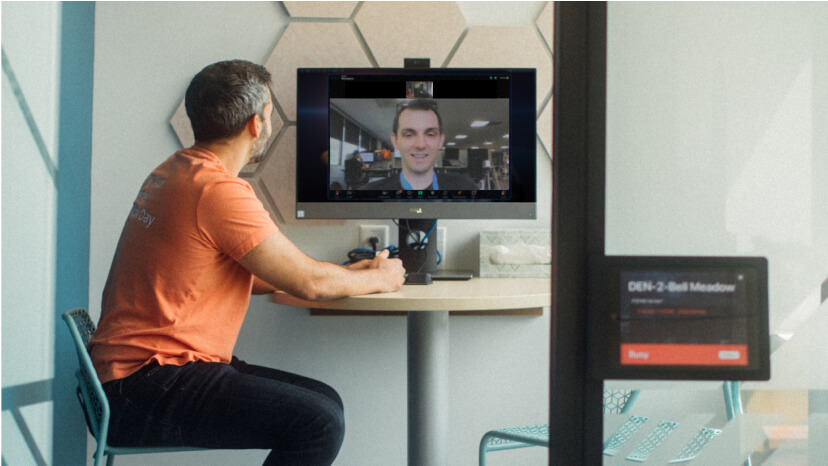
A remote work environment is a fully virtual, off-site setup where employees communicate via digital tools like video conferencing or instant messaging. Remote workers typically complete their work from a home office or a coworking space, and schedules may be flexible or require set hours depending on the type of work.
Remote work reduces commute time and can improve work-life balance, autonomy, and employee trust. For employers, remote work expands access to a broader (sometimes even global) talent pool, making it easier to hire top talent.
On the other hand, remote work may lead to employees feeling isolated, fewer opportunities for team bonding, and possible overwork since there’s no true separation between “home” and “office.” Plus, there’s a strong need for excellent communication skills and tools.
Example: A SaaS company that operates remotely, communicating via Zoom Team Chat and Zoom Meetings
Ideal for: Teams that want flexibility while still engaging in in-person collaboration
A hybrid environment blends aspects of traditional and remote environments. A hybrid schedule often mixes in-office and remote work by splitting the week — for example, two remote days and three days in the office. Some companies establish different structures, like one in-person week per month.
The benefit of hybrid work is that it offers a mix of structure and flexibility, which can increase employee morale and retention. It also allows teams to collaborate in person and businesses to have more in-person oversight.
However, hybrid work also requires strong communication tools just like remote work. And because employees may work different schedules or in-person days, there’s a risk of unequal access or visibility to leadership.
Example: A marketing agency with three remote days and two in-office days
Ideal for: Small businesses or startups that need flexibility without high real estate costs; freelancers or remote workers who want in-person connection
Coworking involves a shared office space where workers from multiple companies come together to work. Companies may rent ongoing space, or individual employees might sign up for a few days here and there.
Working from a coworking space provides networking and collaboration opportunities and can be more cost-effective than renting a full office. However, these spaces can lack privacy and may be noisy and distracting. And because they’re open to various companies, the space won’t be tailored to your company culture.
Example: A tech startup renting space in a WeWork location
Ideal for: Teams that need to innovate, brainstorm, and ideate
Collaborative environments are typically in person, but they don’t necessarily align with other traits of a traditional work environment. Rather than siloed offices and hierarchies, collaborative environments may include open-office floor plans, team collaboration, and space for brainstorming sessions.
Environments like these encourage creative problem-solving and the sharing of ideas, leading to stronger team cohesion. There are challenges, though, including the potential for noise, distraction, and a lack of privacy.
Example: A creative studio with open spaces and daily standups
Ideal for: Skilled, self-motivated employees
Autonomous environments put the responsibility of successful work directly onto the employees, letting them determine when, where, and how to complete their best work. Employees typically have ownership over their projects, flexible hours, and minimal supervision.
An autonomous environment can foster innovation and high engagement, as well as attract top talent who are experts in their field and want to work accordingly. At the same time, these types of work environments require a high level of discipline, and there may not be as much team cohesion as in other workspaces.
Example: A research lab that lets scientists design and manage their own experiments
Ideal for: Sales teams, newsrooms, startups
A fast-paced environment isn’t limited to a single type of company but can often be found in those that need to move quickly and make rapid decisions with high urgency. These environments may see a lot of change or ambiguity.
This can be great for those who thrive in an exciting, dynamic environment that encourages adaptability and self-motivation. But if a fast-paced environment is mismanaged, it can lead to burnout, confusion, and errors.
Example: A sales team taking multiple client meetings a day
Regardless of the type of environment, it’s crucial to strive for a positive working culture. This responsibility falls to both managers and individual contributors, each with their own role to play.
Managers should design and implement policies that serve a healthy working environment. They should also provide necessary support and guidance to their teams and foster an inclusive, collaborative culture. Employees should remain team-focused and show up with a positive and motivated attitude.
Below are six tips to effectively create a positive work environment.
First, make sure the physical space is welcoming, accessible, and comfortable for all employees.
Common elements to consider include lighting (make sure it’s not too dim but also not distractingly bright), the noise levels (or availability of quiet spaces), and access to ergonomic equipment. While not necessarily critical, it can be a nice touch to allow for personalization of individual workspaces.
Be mindful, too, of accessibility for individuals with disabilities. For example, you may need to provide access to elevators or ramps for those who use wheelchairs.
There are still ways to provide a comfortable environment for remote employees who may not use your company’s physical space very often. This can include offering a stipend or reimbursement for home office equipment or furniture or providing training or education on ergonomics.
Tip: Begin with an ergonomic assessment, which evaluates physical risks in your environment. You can do this by observing employees and analyzing tools, routines, and workstations to check for anything that causes repetitive movements or awkward postures.
Boost morale and engagement by encouraging employee recognition and appreciation. You can do this by developing reward programs, encouraging praise for a job well done, and offering shoutouts in meetings for those who have hit milestones or achieved big goals.
Involve employees by asking them to submit feedback and recognition of their colleagues’ achievements.
Tip: Implement a monthly spotlight to celebrate employees’ efforts and contributions.
As a leader, you are uniquely positioned to model the behavior you want to see from your team. This means serving as an example of a strong work ethic, proactive communication, and living out company values.
It’s also key to set the example of inclusiveness, fairness, and respect. Be sure to keep these tenets in mind as you engage with and manage your team.
Tip: Share transparent updates with the team, highlighting your own successes and challenges.
To keep communication transparent and kind, promote consistent feedback loops to encourage everyone to feel safe sharing both positive and constructive feedback.
When receiving feedback or participating in meetings, engage in active listening and positive dialogue. Remember to be inclusive, such as requesting feedback directly from those who tend to be quiet in meetings.
Tip: In addition to teamwide sessions, schedule regular one-on-one meetings with your direct reports. This gives employees more privacy and may help them feel more comfortable sharing feedback.
Find ways to offer time for employees to catch their breath, especially for remote or hybrid teams with a more blurred line between work and home. This work-life balance gives employees time to relax, focus on family or self-care, and reset.
Here are a few ways you can enhance work-life balance:
Tip: Encourage employees to block “no meetings” time on their calendar. Even better, suggest a team- or company-wide “no meeting” day each week or month. This can give employees time to focus on necessary work so they don’t have to catch up after hours.
Help employees grow, develop, and build skills by giving them ample opportunities to learn. This could be in the form of internal company training, access to webinars or virtual trainings, or an educational stipend.
Other avenues for growth include a mentorship program that pairs employees with mentors from within the company, access to detailed career ladders and promotion pathways, and job shadowing.
Tip: Offer an educational or professional development stipend for courses or certifications, conferences or events, or supplemental educational material.
While it’s not always possible to fully understand the ins and outs of a specific work environment until you’re in it, there are a few red flags to be aware of when assessing an organization.
Throughout the interview process and any other interactions with the company, be on the lookout for poor communication, high turnover, long hours, and negative morale. Here are a few tips:
Work environments come in all shapes and forms, and what’s right for one organization or employee may not be right for another. The best environment boosts employee engagement, team productivity, and ultimately, customer satisfaction.
Enhance your work environment with Zoom Workplace. With Zoom, you can streamline remote or hybrid communication, even for on-site workers. Plus, you can easily schedule and plan virtual meetings and centralize collaboration across the organization.
Physical space, workplace culture, opportunities for growth and development, and recognition are common work environment elements that directly impact productivity.
The physical factors of a workplace, such as adequate lighting, low noise, and ergonomic equipment, lead to more comfort and less fatigue and stress. This, in turn, leads to higher employee engagement and morale, ultimately resulting in higher productivity and greater satisfaction.
To assess and improve your current workplace environment, start by running surveys and feedback sessions as well as analyzing turnover and retention metrics. You can also run an ergonomic assessment to identify roles or equipment that cause musculoskeletal issues for workers, then find ways to address them. Benchmark metrics you want to measure, set goals, and implement strategic changes incrementally over time.