
Your guide to getting started with ZoomMate
Everything you need to start using ZoomMate: notes, search, workflows, and AI tools — all inside Zoom Workplace.
 12 min read
Published on May 28, 2026




Effectively managing employee experience can be the difference between a happy, engaged workforce and a struggle to keep teams motivated. And employee experience matters: It directly impacts how an employee feels about your company and is tied to performance, retention, and company perception.
One of the biggest areas impacting employee experience today is workplace flexibility. In Zoom’s Navigating the Future of Work report, 36% of employees stated they would prefer a “work from anywhere” arrangement, while 25% preferred an on-site environment. All other employees voted for variations of hybrid or remote schedules. As flexibility becomes more common, businesses will have to adapt to offer the best experience.
If you’re ready to improve your employee experience, you’re in the right place. We’ll walk you through what employee experience is, why it matters, and nine strategies that can help.
Employee experience describes the journey an employee has within an organization, including daily interactions and structured touchpoints like hiring, onboarding, and development. Systems and tools, company policies, and the overall work culture also impact EX.
The employee experience begins during the recruitment and interview process and continues through an employee’s work with colleagues and leadership. Employee experience spans an employee’s entire tenure with a company — ideally, encouraging them to stay as long as possible.
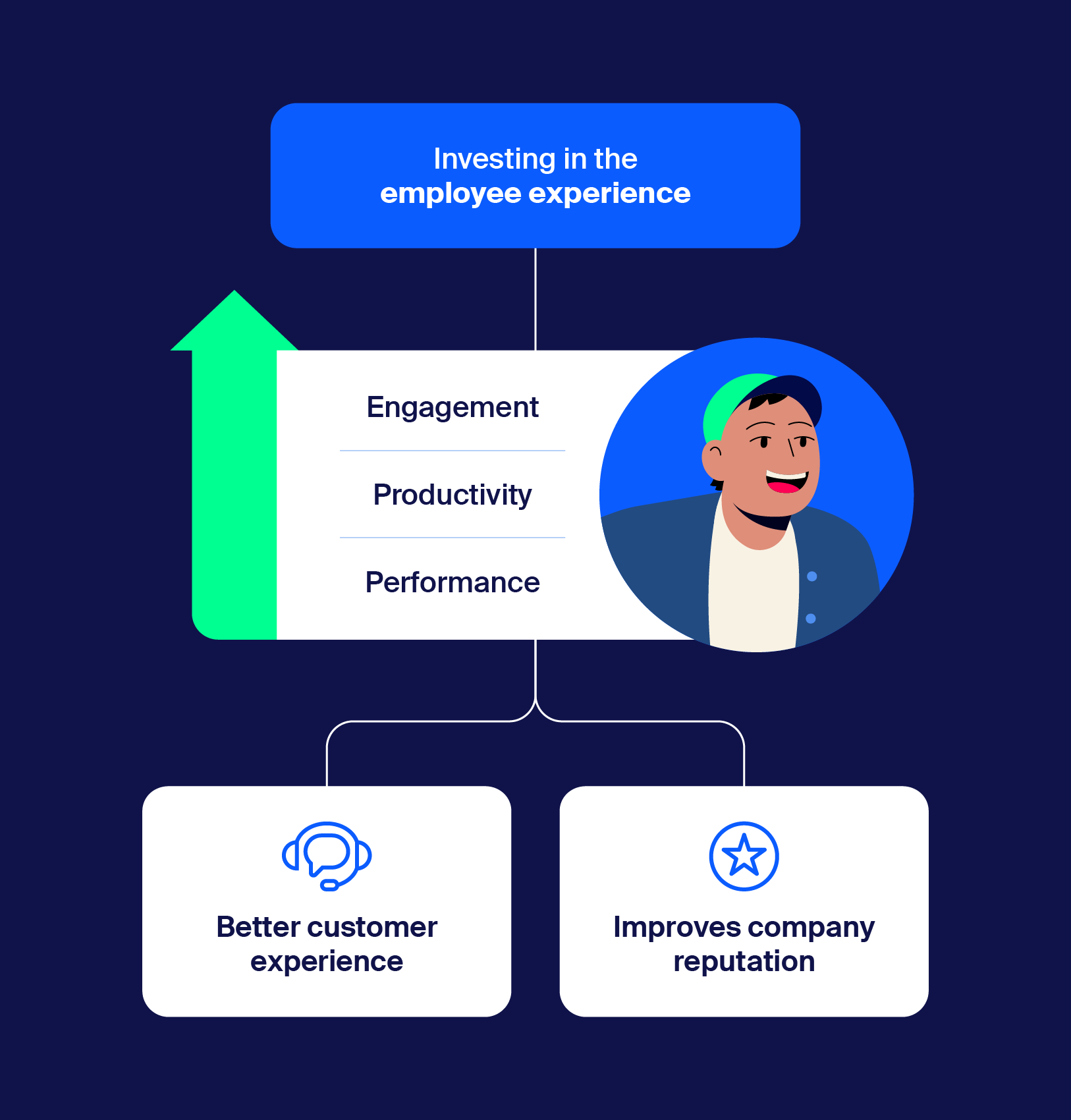
Understanding the importance of employee experience is critical, as it often relates to an employee’s engagement, retention, productivity, and even customer and other stakeholder outcomes.
In other words, a more positive employee experience can influence their work output and motivation. And better work can lead to stronger customer outcomes, higher satisfaction, and better business success.
Here are a few ways that employee experience can directly impact business performance:
Employee experience occurs alongside the overall employee lifecycle, which begins with attraction and ends with the employee’s departure from the company. There are several stages of this process, each with its own nuances and impacts.
The hiring stage includes talent attraction, candidate recruitment, and the selection and offer negotiation process. Prospective employees interact with several stakeholders at this stage, including recruiters, external job boards, hiring managers, prospective colleagues, and the HR team.
These early impressions matter; candidates expect that a company hoping to attract them will put their best foot forward. Plus, employers have a lot of impact on the nerve-wracking job interview process, with the ability to make it fairer and more transparent — or not. How the hiring process works sets the stage for how a prospective employee feels about your organization’s priorities and culture.
Once a candidate accepts an offer, the next stage is onboarding. An effective onboarding program will make a new employee feel welcomed and excited to be part of your organization. At this stage, the focus is on communicating the expectations of the role, integrating the new hire into the organization and their team, and providing the training and resources they’ll need for success.
Onboarding directly impacts an employee’s future with the organization. A Deloitte survey found that 69% of employees were more likely to remain at a company for 3 years if they experienced a positive onboarding process.
After onboarding, once an employee has stepped into their role, employee experience becomes an ongoing process tied closely to engagement and retention. Multiple factors come into play here, including:
The final part of the employee experience lifecycle is offboarding. This is the process by which an organization and an employee terminate their relationship, whether voluntarily or involuntarily.
While the end of a job may not always be a happy experience, what happens during offboarding can influence how the former employee perceives your company. Consider offering an exit interview to collect feedback, allow the employee time to say goodbye to colleagues, and see that final paychecks and health insurance coverage are handled quickly and efficiently.
When you want to improve employee experience, there are many areas to focus on and options to consider. These range from collecting employee feedback to designing intentional milestones to creating a flexible and inclusive culture.
One of the best ways to capture employee sentiment and uncover areas of improvement is to send employee experience surveys. Regularly surveying your employees can help you flag early warning signs of disengagement or dissatisfaction.
It’s just as critical to act on the feedback you receive. Transparently sharing survey data and your plans to address it can increase trust and engagement.
There are various types of surveys to consider, including:
Pro tip: Leverage employee experience software to help. Use Zoom’s survey tool to gather feedback directly from your teams, right in your existing workflows.
Onboarding sets the stage for an employee’s future with the company, so it’s imperative to get it right. Make sure your onboarding plan incorporates clear role expectations and definitions of key success metrics, as well as access to crucial resources, tools, and training.
It’s not just about on-the-job information, either. A strong onboarding program also connects new hires to the team and the overall company culture, helping them integrate as quickly as possible. This should also include social integration with colleagues, which can be especially meaningful for hybrid or remote employees who have fewer organic social opportunities.
Pro tip: Create a comprehensive employee intranet to provide new hires and existing employees alike with all the resources they need.
Business communication is key to a strong employee experience, influencing engagement and trust. It’s especially important in today’s flexible or virtual environments, when workers may lack the “water cooler chats” of full-time onsite work.
Leaders should provide consistent messaging and transparent communication, while also offering two-way channels for both sharing and receiving employee feedback. Employees should have easy access to the information they need without having to dig through overly siloed information or disparate tools.
One way to foster strong communication is to leverage a unified communications platform that enables omnichannel communication. When employees can connect via video, chat, or written content in a single system, they’ll experience stronger collaboration and communication.
Pro tip: Consider disseminating information through multiple channels, such as a live town hall meeting, email, and an intranet post. This way, your message reaches everyone, regardless of their communication preferences.
Recognition helps employees feel appreciated for their work, and it can also help leadership reinforce positive behaviors. But recognition doesn’t only have to come from leadership — peer-to-peer recognition can be equally impactful and should be part of your employee experience strategy.
Digital platforms like Workvivo can make recognition fun and easy, and AI features can help surface contributions that might otherwise go unnoticed. For instance, when Rakuten Symphony’s German office implemented Workvivo, over 80% of employees started posting shoutouts and updates within just one month.
Pro tip: Consider creating a formal recognition program, both top-down and peer-to-peer, while also encouraging leaders to recognize employees on an ad hoc basis.
Flexibility continues to be more than a nice-to-have. In fact, 43% of employees believe flexible work is an expectation, not simply a perk, and 70% say they would consider leaving their job for a more flexible one, according to Zoom’s Flexible Work survey.
There are plenty of reasons flexible work is linked to a better employee experience. Employees with flexibility incur fewer expenses, achieve better work-life balance, and — as a win for employees and the business — realize better focus and productivity.
Look for ways to offer flexibility, whether that means remote work, a hybrid environment, a flexible schedule, or simply more autonomy. Remember that with increased flexibility must come strong communication and collaboration strategies. This is an area where AI and digital employee experience tools can be useful.
Pro tip: Focus on work outcomes rather than hours worked or location, and make sure remote and hybrid employees have equal access to growth and recognition opportunities as their in-office counterparts.
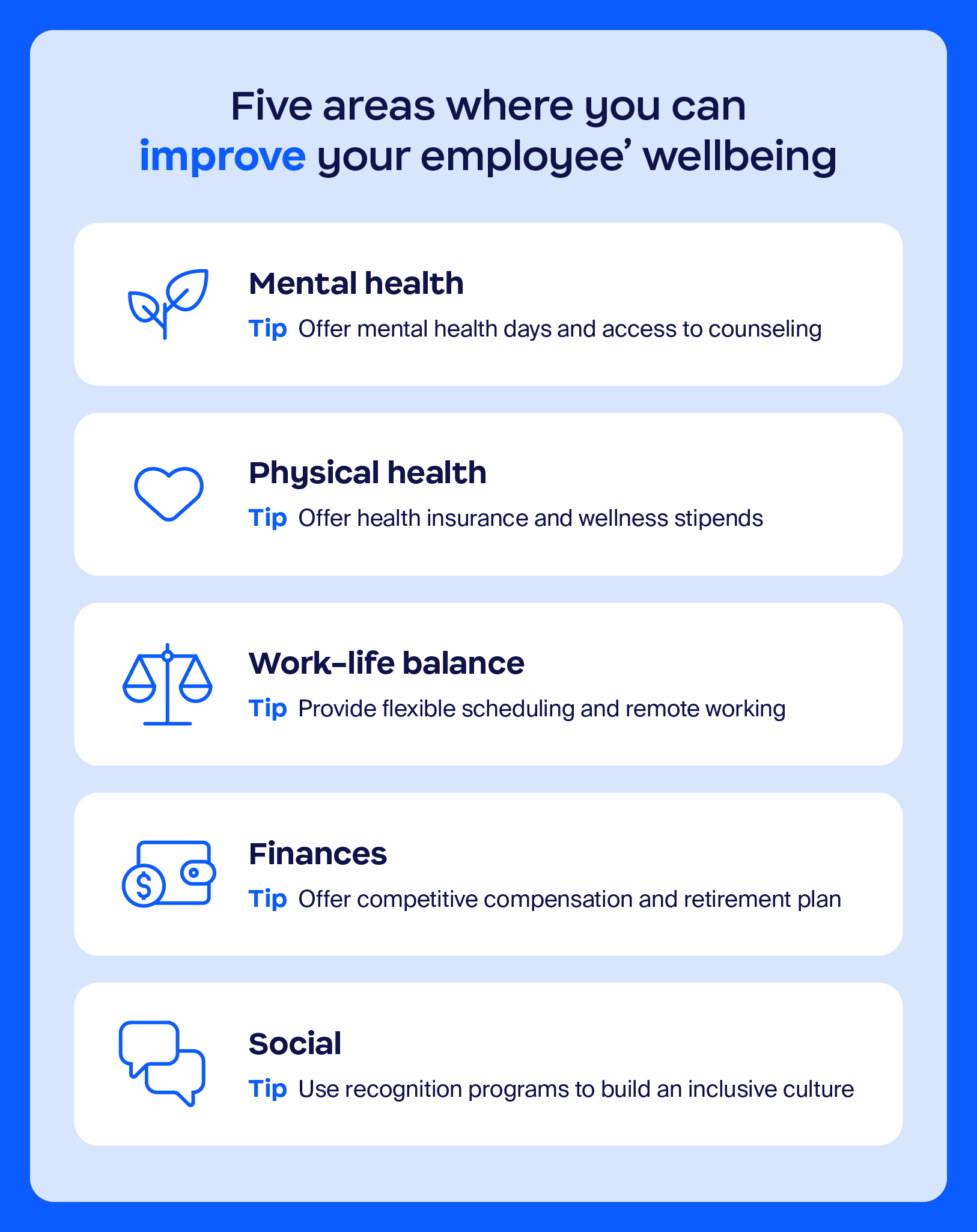
Stress and burnout are major factors in poor employee experience and low engagement. After all, if an employee doesn’t feel physically or mentally healthy, they’re likely to become burned out or stressed, leaving them unable to perform at the same level as before.
To avoid this, invest in employee well-being. Consider offering gym access (an office gym or discounted membership), wellness stipends, or accessible mental healthcare. You can even offer mental health days along with flexible schedules.
Pro tip: Encourage leaders to model healthy boundaries and self-care by openly using available resources.
The relationship between leaders and their direct reports can directly impact the employee experience. A strong manager-employee relationship is more likely to lead to strong performance and retention.
Encourage managers to hold regular one-on-one meetings with their direct reports to address roadblocks and offer coaching and feedback. Managers should set clear expectations, hold employees accountable, and be willing to seek feedback from their reports.
Pro tip: Offer leadership training for managers to better support their teams.
An inclusive workplace can foster a culture of trust and belonging. If employees feel included and celebrated for who they are, chances are they’ll want to remain with your company and help it succeed.
Here are a few tips for building stronger diversity, equity, and inclusion (DEI) practices:
Pro tip: Use surveys to measure inclusion data, not just demographic metrics.
A lack of growth opportunity is a top reason for employee disengagement, according to Owl Labs’ 2024 State of Hybrid Work report. Reduce turnover by giving employees access to career growth and development.
The first step is to identify clear career paths for every role. When employees are aware of their potential trajectory, they can work with their manager to develop the skills they need. Offer formal upskilling or reskilling programs for employees who wish to advance in their current role or explore new opportunities. And make internal mobility an option for those looking to step into a new position.
Pro tip: Ask employees about their specific career goals and what they hope to learn, then align development plans and provide ongoing feedback.
The employee experience is shaped by your organization’s culture, leadership, systems, and communication practices. A robust, multifaceted employee experience program can help you attract, engage, and retain top talent, ultimately driving business growth.
To craft a strong employee experience program, look no further than Zoom’s Workvivo. With Workvivo, you can centralize all the moving parts of the employee experience, including internal communication, employee recognition, onboarding, and engagement, in a single platform. Plus, it’s easy and fun to use, so employees can jump right in.
Employee experience metrics to track include:
Measure these through regular surveys and be sure to transparently share your findings — and your plans to address them — with your employees.
Employee engagement is one part of the broader employee experience journey. In other words, employee engagement refers to the level of motivation and commitment an employee feels. In contrast, employee experience encompasses the full journey and environment an employee experiences throughout their lifecycle with a company.
No, employee experience is not the same as human resources (HR). HR is typically responsible for some elements of the employee experience, such as hiring and onboarding, but it’s not solely their responsibility. Creating a positive employee experience requires a collective effort from all departments within an organization.