A swiftly-moving virtual clinic
CTH partnered with Zoom to bring its visionary virtual clinic to life.
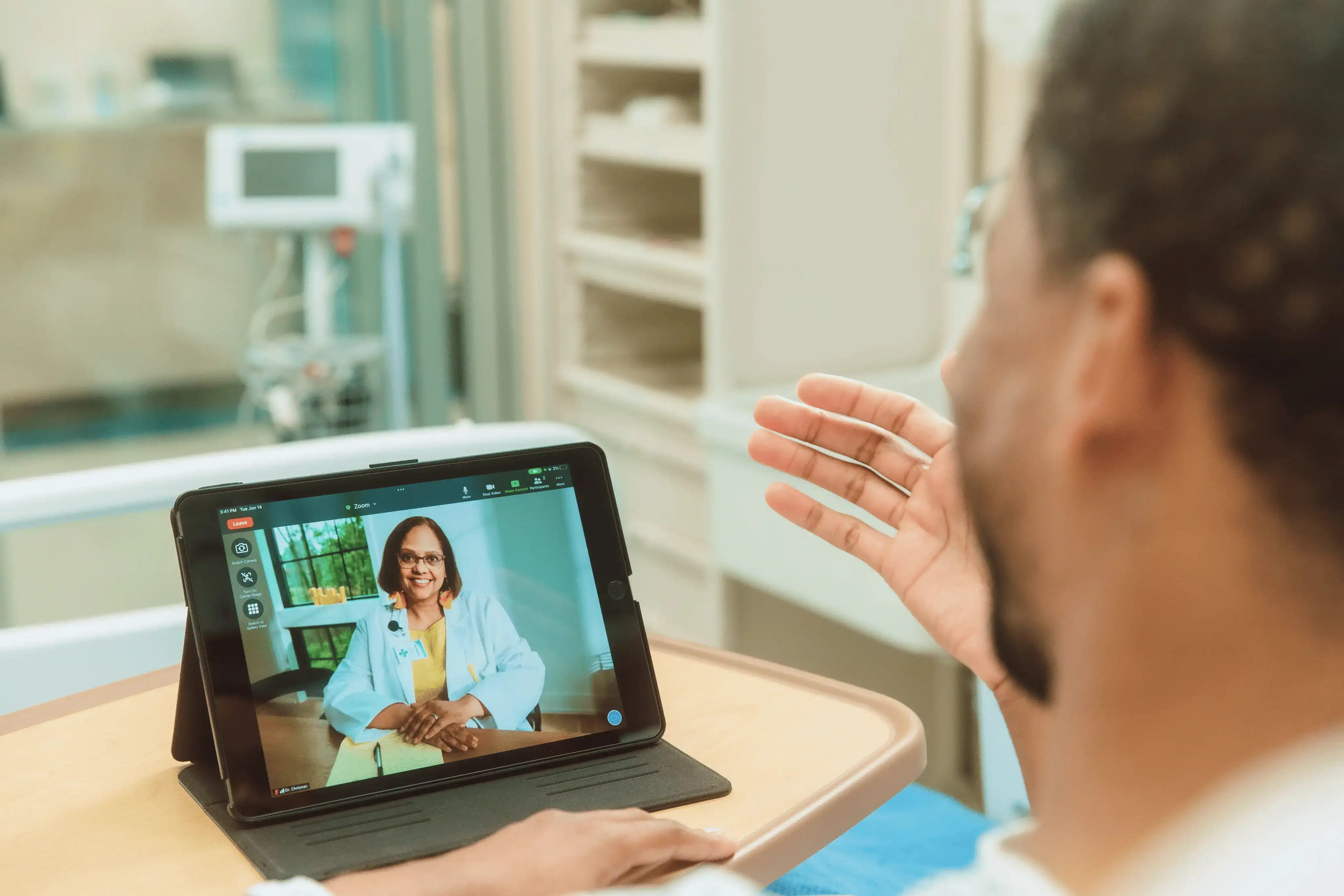
With Zoom CX powering a virtual patient room experience, CareTalk Health unlocked scheduling capacity and patient volume that far exceeded what their previous model could support. Additionally, Zoom Virtual Agent (ZVA) extends that scale into after-hours scheduling so no patient inquiry goes unanswered. Together, they replaced a fragmented model of outbound calls and disconnected scheduling tools with a unified system for self-service patient support, nurse intake, and clinical routing for provider visits.
By automating intake and administrative tasks, Zoom allows clinicians to focus on care delivery. This enables CTH to support 3x more patients by organizing patients into queues and matching them to the appropriate care provider based on factors like state licensing, medical need, and provider availability. Beyond standard self-serve functionality, this kind of routing connects patients to the right clinician quickly, while reducing manual workload for the patient support specialist (PSS).
Every visit starts with a PSS, who helps patients connect via video, and verifies patient information. From there, the system routes patients into nurse queues, where nurses gather vitals, review symptoms, and conduct intake assessments before handing patients off to providers. With Zoom Meetings built into the workflow, CTH removes many of the extra steps between intake and speaking with a physician.
“They’re familiar with walking into a clinic and being greeted at the front desk,” Troy said. “We’ve created that same feeling.”
The model allows each role to focus on what they do best. For providers, the new system allows them to spend time with patients and provide much-needed care rather than coordinating logistics.
“It wasn’t just deploying video technology. It was helping CareTalk create a repeatable, measurable process that could impact patient participation, increase wellness visits, and support future growth,” Troy said.
From idea to live operations in four days
CareTalk Health’s transformation happened quickly.
After describing its vision to the Zoom team, CTH connected with Zoom partner TCS, which invested significant time working alongside CTH’s leadership team to understand their patient journey, operational workflows, and long-term vision for transforming patient visits.
“We had a call on a Wednesday, and we had our virtual clinic live the following Tuesday,” Troy said.
TCS provided strategic guidance, solution architecture, configuration services, testing support, training, and go-live assistance to ensure the platform was tailored to CTH’s unique business requirements. Beyond delivering the core platform, TCS also dedicated additional resources to troubleshooting complex integration challenges, refining call flows and patient experiences, assisting with SMS campaign readiness, supporting compliance and 10DLC requirements, and providing consultation on future-state AI and automation strategies.
Ongoing support from TCS has been especially important as CTH expands its partnerships with large payer organizations, where compliance and scalability are essential.
Scaling scheduling capacity and patient volume
With Zoom powering routing, intake, and communication across the care journey, CTH estimates it has increased the number of patients it can serve going from one appointment per hour to nearly four. In some parts of the business, scheduling capacity has grown from 10,000 a month to 60,000 a month.
“In the past, we might have seen 2,000 patients a month. In a recent month, we saw over 10,000—and we still have capacity to grow,” Troy said.
More importantly, the shift from a linear model to a well-coordinated virtual clinic has led to a smoother experience for both patients and providers.
The result is a lower cost to serve; built-in AI and intelligent routing reduce the effort required to deliver each visit, while consistent, connected patient experiences build the kind of loyalty that drives long-term retention and satisfaction.
“The ease at which you guys are now delivering patients to me is incredible,” stated one provider’s feedback.
Zoom Quality Management adds another layer to this efficiency. With AI-powered auto-evaluation, CTH can now review and score provider interactions at scale, turning coaching from a periodic exercise into a continuous feedback loop that drives better care outcomes across every patient visit.
The operational lift has also opened new doors for CTH. The company is expanding into after-hours care, preventative visits, and support for self-insured employers looking to improve healthcare access while reducing unnecessary emergency room visits.
A proven tech backbone for a more connected future
CTH is determined to iterate in parallel with Zoom and implementation partner TCS. Next steps include testing new routing models, smarter screen pops, provider matching systems, and richer reporting capabilities. Through it all, CTH keeps its purpose front and center.
“How do we get back to that human connection?” Troy said. “How do we make patients feel like they just saw somebody who cares about them?”
To do this, the team is exploring ideas to make healthcare even more proactive, intelligent, and human-centered.
Zoom AI Expert Assist plays a key role in maintaining that balance, providing care team members with AI-powered real-time contextual guidance during interactions so they can respond with confidence and precision, while patients experience the warmth and attentiveness of a truly human connection. They want to expand their use of ZVA for after-hours scheduling so providers can focus on patients, not keyboards.
Looking ahead, CareTalk Health plans to expand how they’re thinking through patient documentation so CTH’s doctors and nurse practitioners can focus directly on care. “We’ve made a corporate decision to do all of this within one technology platform, so we can focus less on tools and more on patients,” Troy said.
As CTH continues to push the boundaries of virtual care, Zoom provides the open, AI-native platform to make that possible, unifying patient interactions, care teams, and data in one secure, HIPAA-ready system so providers can focus on patients, and patients can focus on living well at home longer.