
Zoom Workforce Management uses AI-powered forecasting, scheduling, and intraday monitoring to simplify staffing and improve customer service.
Select a language
Zoom Workforce Management uses AI-powered forecasting, scheduling, and intraday monitoring to simplify staffing and improve customer service.
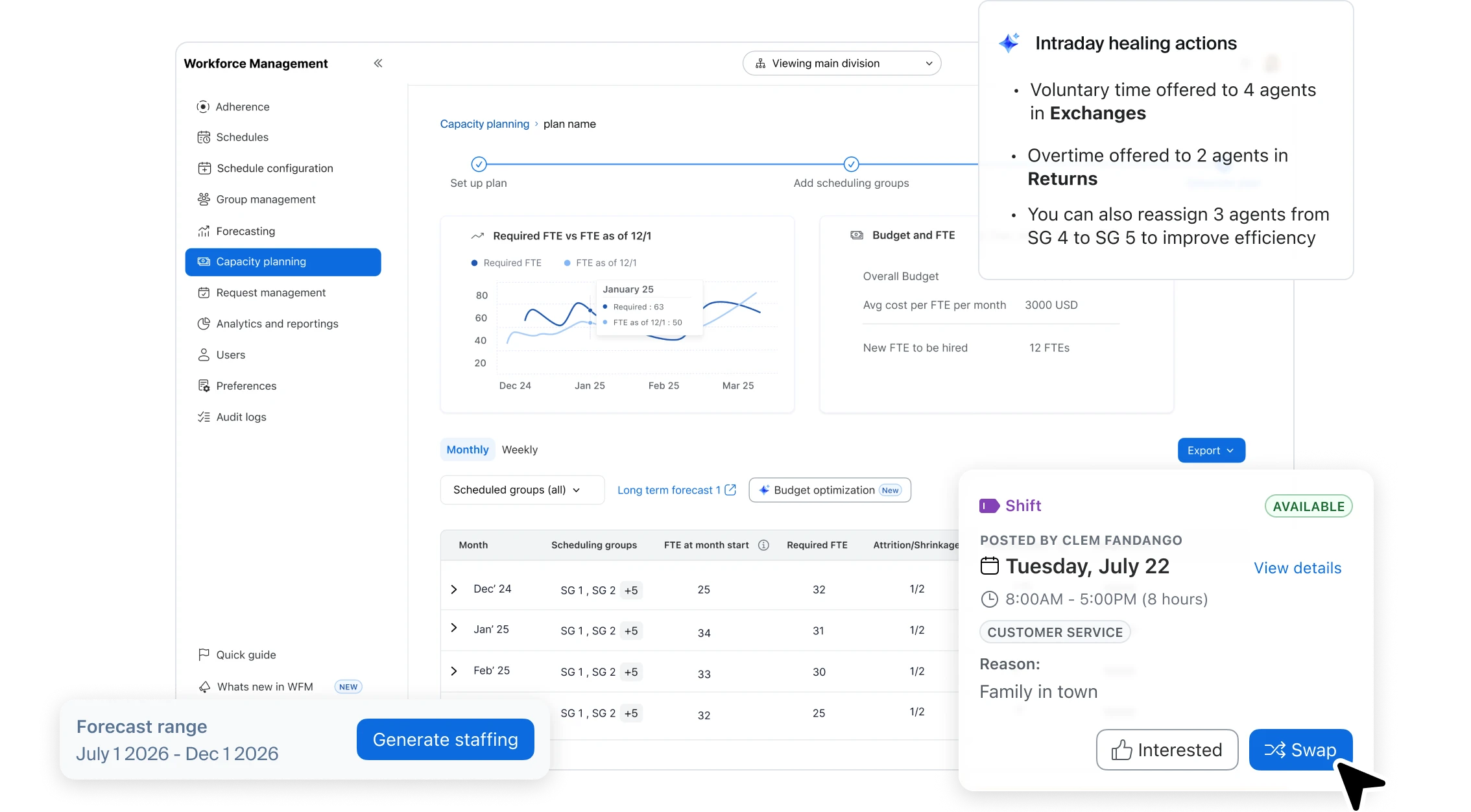

Plan for spikes and seasonal trends using historical data.

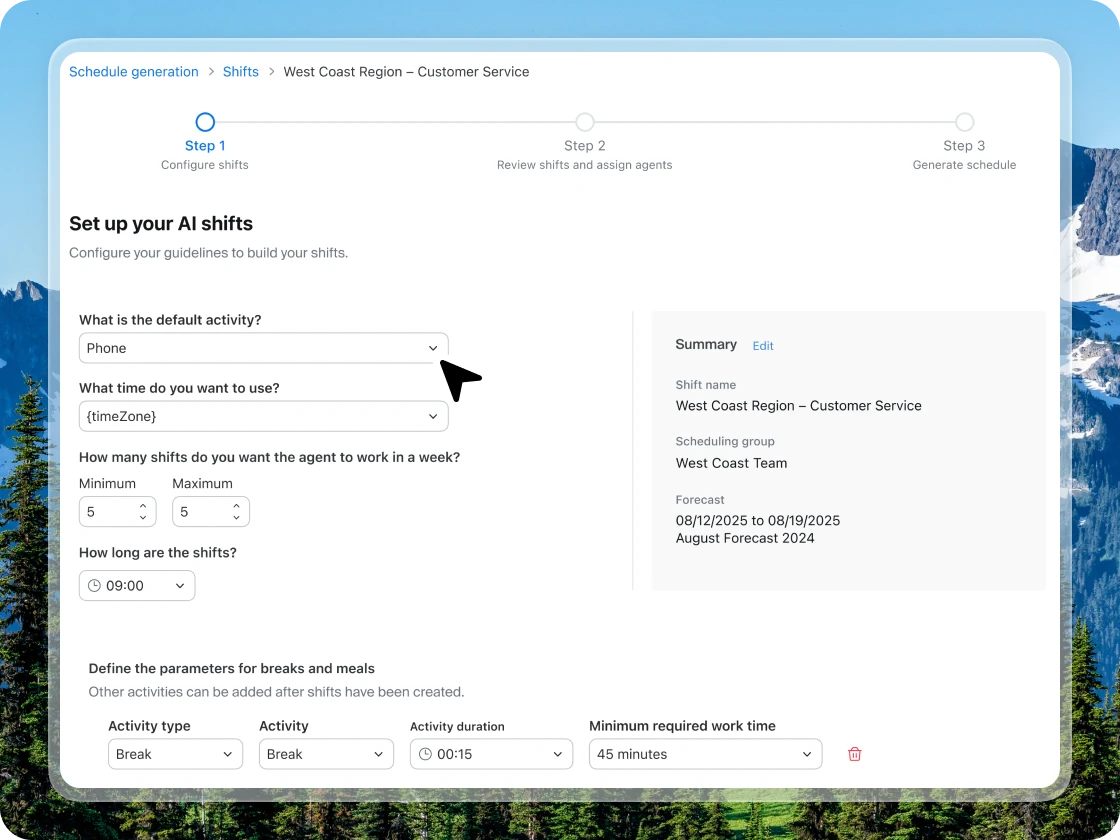
Create schedules in minutes based on staffing needs.

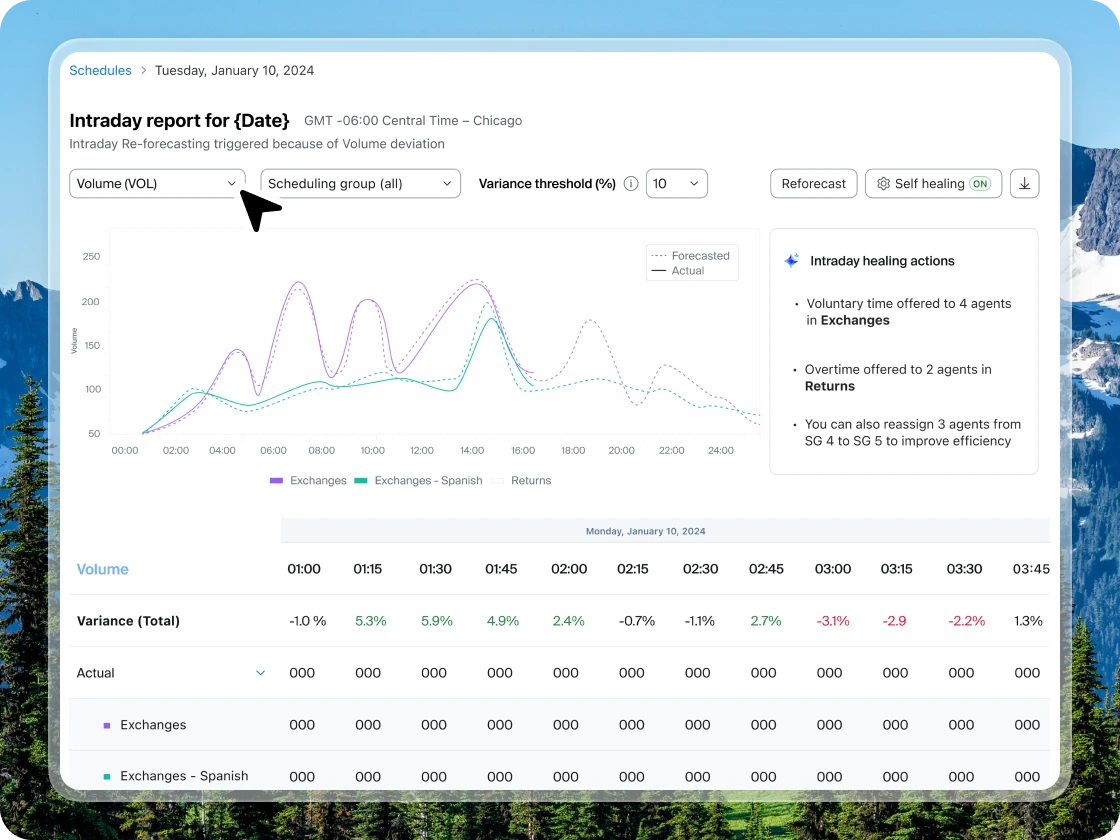
Gain instant visibility into your operations and make intraday adjustments on the fly.

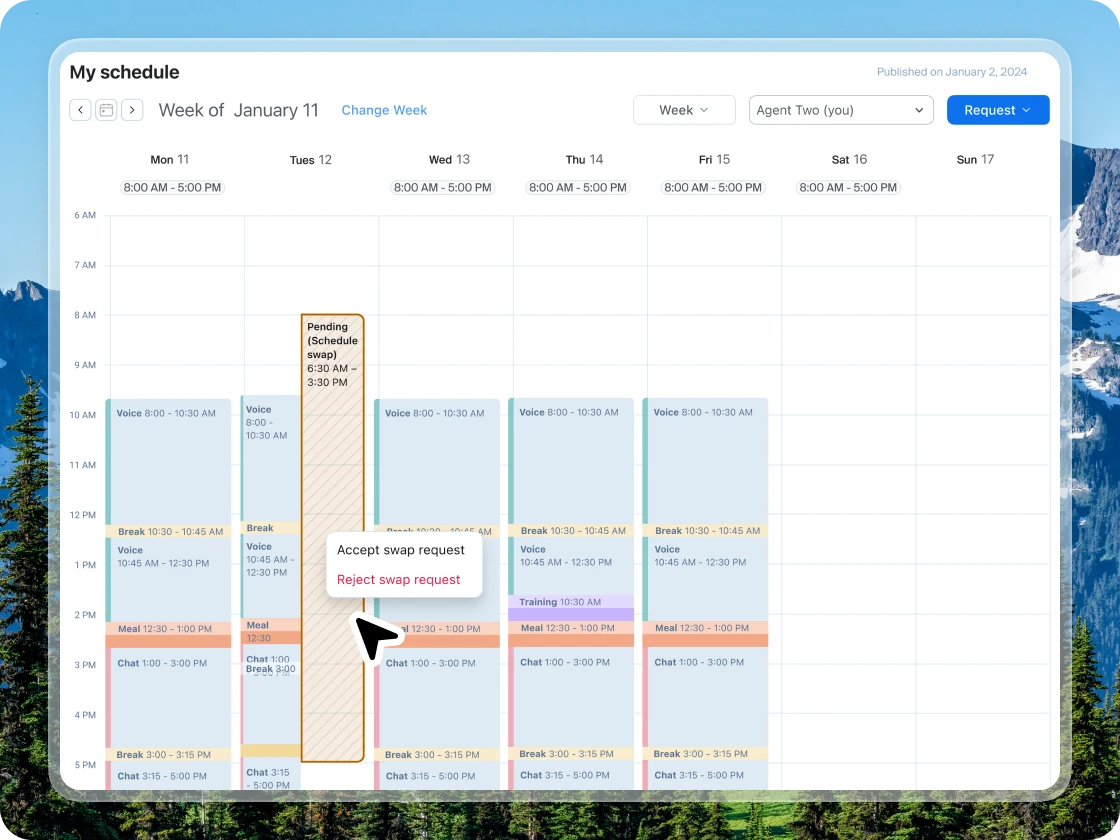
Automate repetitive tasks to free up your team for more meaningful work.


Orchestrate customer interactions across phone, video, email, chat, SMS, and social media.
Deliver fast support 24/7 with an AI agent that can resolve customer issues end-to-end.
Empower agents with real-time insights to resolve customer issues faster and boost satisfaction.
Monitor interactions, evaluate agents, share actionable insights, & identify improvement areas.
Zoom CX Insights delivers AI-driven answers from customer data—no dashboards needed.
Talk with one of our experts to come up with a plan that’s right for you.
Zoom Workforce Management is an AI-powered, all-in-one staffing and scheduling solution designed to help organizations plan, manage, and optimize their teams, budgets, and SLAs. Offering a single, unified experience, Zoom Workforce Management's tools forecast labor needs, build optimized schedules, and allow leaders to monitor and adjust workflows in real time, all in the same place.
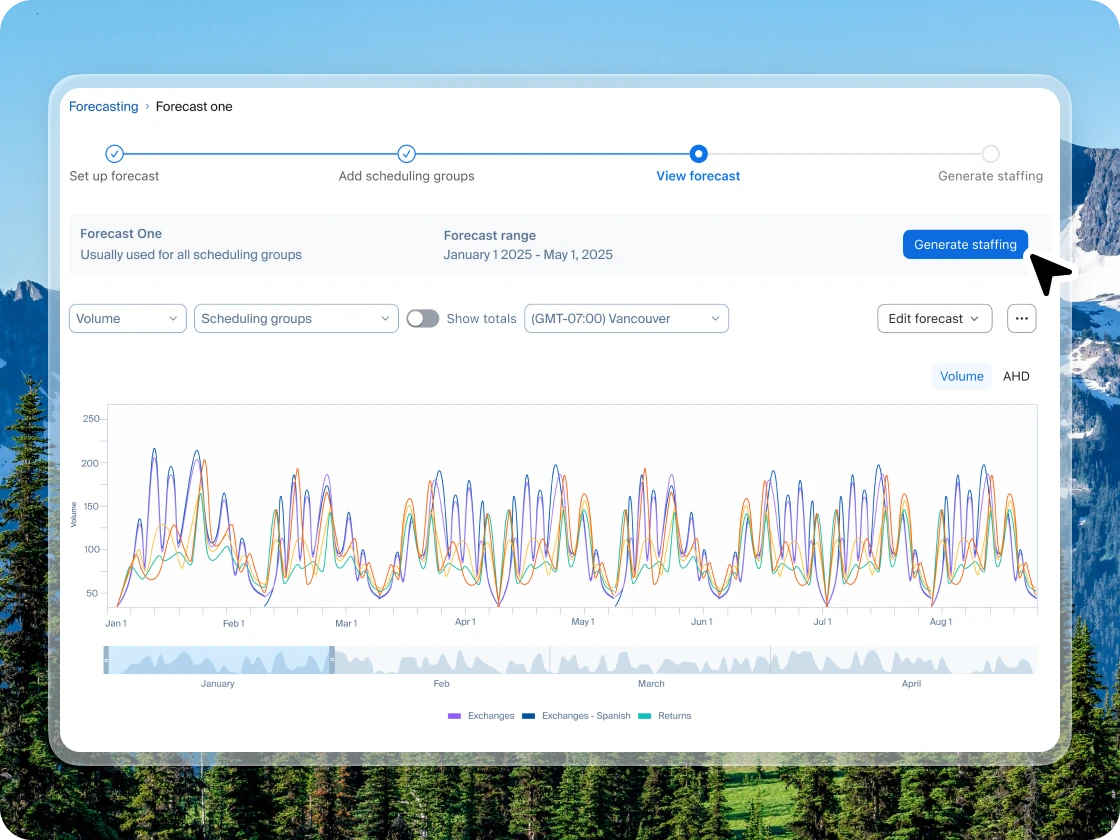
Forecasting is the process of using AI, historical interaction data to predict future staffing needs so organizations have the right number of employees scheduled to meet customer demand efficiently. It generates projections for weeks, months, or years ahead, informing decisions about hiring, training, and budget allocation, especially for new initiatives, campaigns, or seasonal spikes. Forecasting keeps customer service consistent, operations efficient, and costs optimized.
Reforecasting updates an existing forecast based on real-time data or unexpected changes. While forecasting uses historical data for predictions, workforce management systems monitor live data like call volume and recalibrate when new information—such as demand spikes or outages—becomes available. Reforecasting is essential for responsive workforce management, so leaders can make data-supported decisions that adapt to new challenges.
A workforce management system helps organizations plan, schedule, and monitor their teams efficiently — especially in customer service and contact center environments. It combines automation, analytics, and AI to improve both operational performance and employee experience. With a workforce management system, organizations can:
In essence, a workforce management system delivers efficiency, flexibility, and insight, enabling teams to operate smarter and deliver better customer experiences.
The best workforce management system for you depends on your organization's needs, things like the size of your team, the complexity of your scheduling needs, and so on. The most effective, cost-efficient solutions are the ones that combine accurate forecasting, automated scheduling, and built‑in analytics, while giving employees flexibility and self‑service options. There are a lot of options out there, but many come piecemeal, requiring organizations to pick and choose and cobble multiple apps together à la carte. This can create inefficiencies, confusion, and ultimately waste an organization's precious time and resources.
Ideally, your best bet for a workforce management system is one that brings all those solutions into one platform that can automate processes, monitor performance in real time, and interface seamlessly with other systems you already use. Zoom Workforce Management, for example, uses AI‑driven forecasting and easily integrates into the broader Zoom ecosystem. Its powerful tools can also scale with your organization while keeping both managers and employees in sync.