Meet Zoom AI Companion, your new AI assistant!
Boost productivity and team collaboration with Zoom AI Companion, available at no additional cost with eligible paid Zoom plans.
 13 min read
Updated on January 07, 2026
Published on January 07, 2026
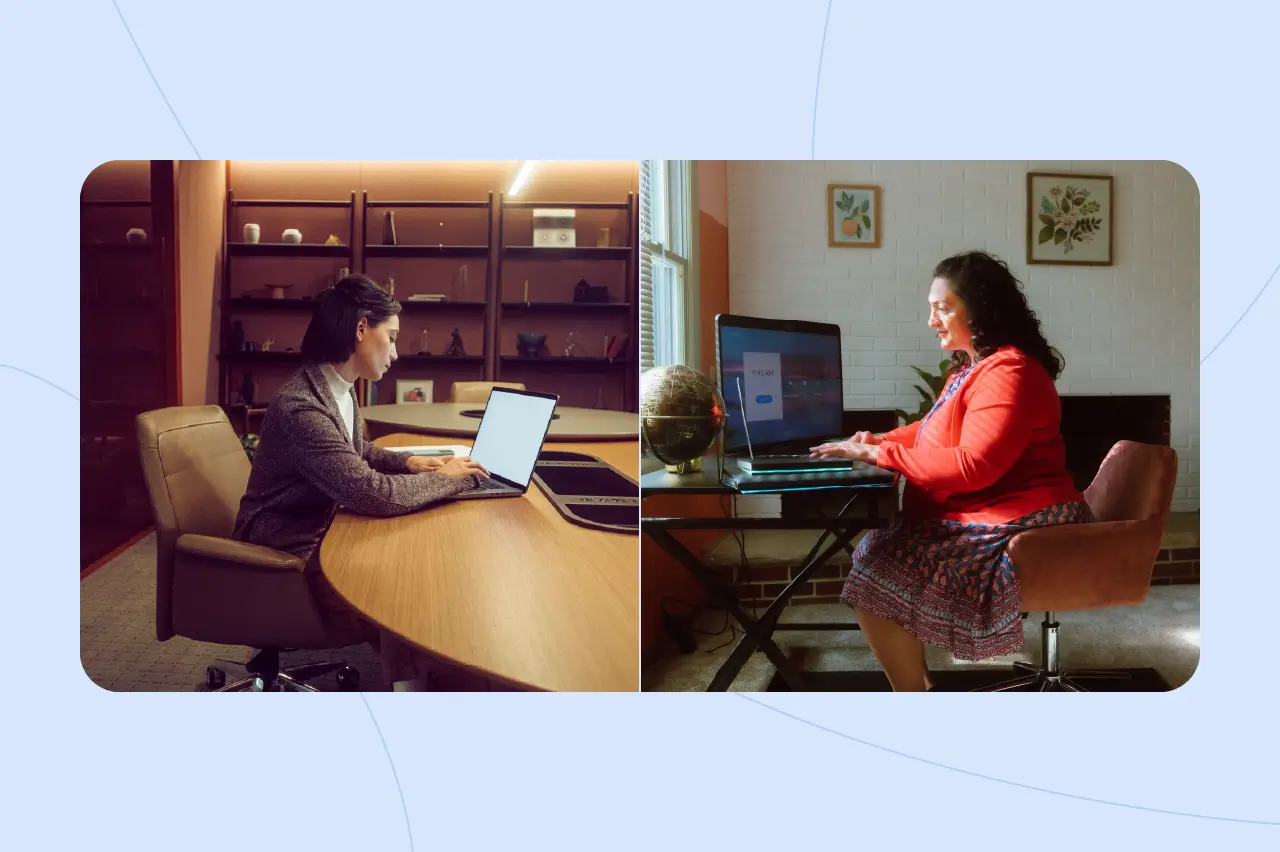



The office, as we once knew it, is changing. Just think about how offices used to be compared to now — it’s clear that flexible work models have and will continue to play a vital role in creating healthy, motivated, and efficient teams.
Hybrid work, a dynamic blend of in-office and remote work, has redefined the way we work and live and how employees engage with their jobs. In fact, Zoom’s research on hybrid work found that 64% of organizations operate with a hybrid model.
|
“Now that companies have built the framework — and experienced the cost and time savings associated with it — there’s no real reason to turn back.” — Mark Lobosco, vice president of talent solutions at LinkedIn |
Let’s explore hybrid work, its different components and types, and how it can help transform your workplace into a healthier, more efficient operation.
Hybrid work is a flexible work arrangement that combines remote and in-office work. Employees split their time between working from home or another remote location and working in a physical office. This approach balances the structure and centralization of the traditional office environment and the flexibility of remote work.
Both employers and employees stand to benefit significantly from hybrid work. For companies, it can lead to increased employee satisfaction, reduced office overhead costs, and access to a wider talent pool. For individuals, hybrid work offers flexibility, improved work-life balance, and the opportunity to work in a more productive environment.
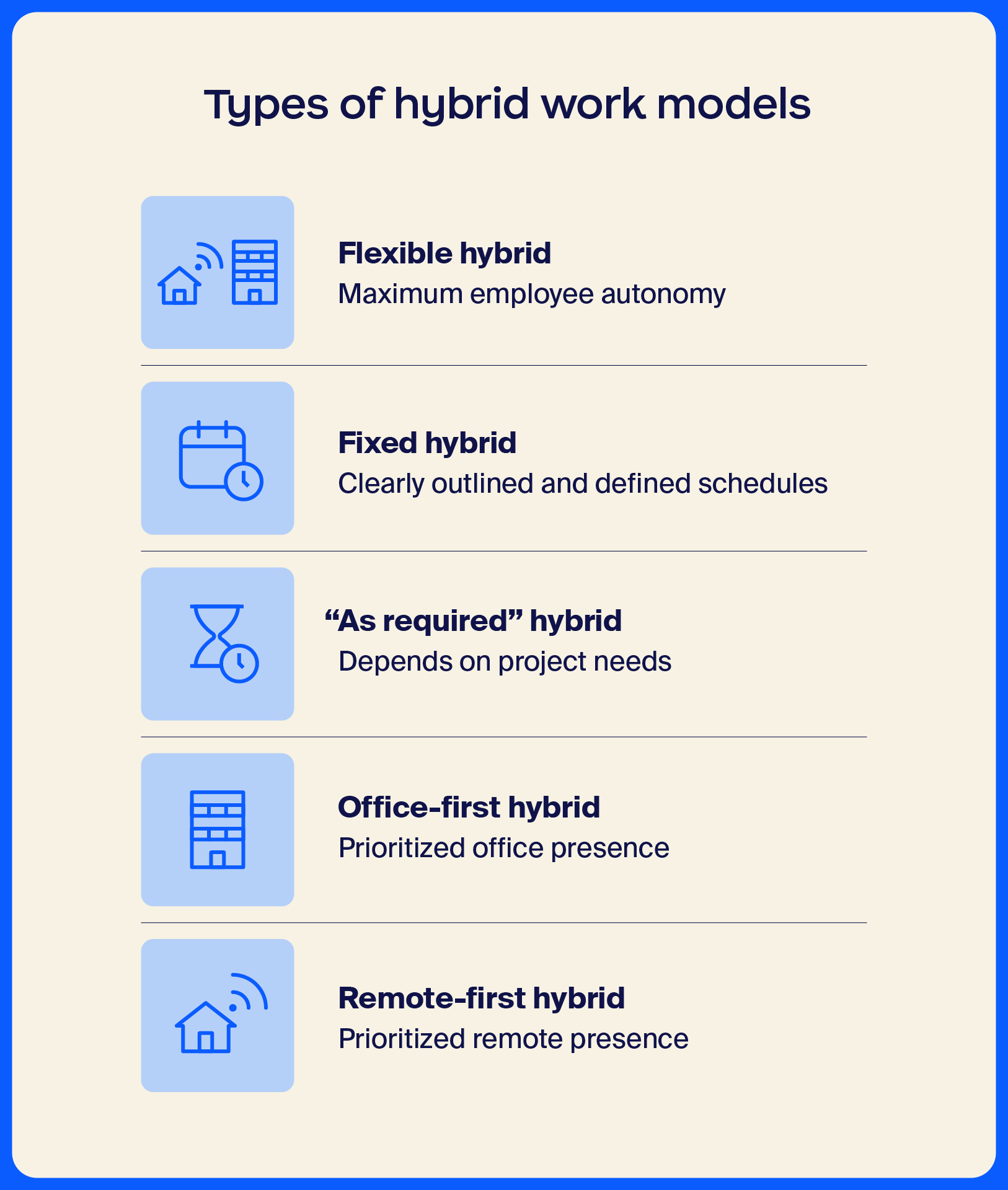
Hybrid work isn’t a one-size-fits-all approach. Companies are and should be experimenting with different models to find what works best for their teams and culture, so much so that 75% of business leaders say their organization will change its workplace model in the next two years toward a more flexible setup. Here are five types of hybrid work to consider:
This approach empowers employees to tailor their work schedules to their personal preferences, productivity levels, and project requirements.
How it works:
Benefits:
Challenges:
It’s essential to prepare your company for the hybrid model by establishing clear guidelines and expectations to maintain productivity.
|
“Telecommuting [...] should no longer be viewed as a nice-to-have, optional perk mostly used by working moms. These common stereotypes don’t match reality — allowing employees to work remotely is a core business strategy today… ” — Cali Williams Yost, ceo and founder of Flex+Strategy Group |
A fixed hybrid work model offers a structured framework for team collaboration and in-person interactions.
How it works:
Benefits:
Challenges:
Companies should balance the need for in-person collaboration with employee satisfaction, then communicate this rationale and be open with the team. Employee input can help business leaders refine the balance of hybrid work to find the ideal remote-to-office ratio.
The “as required” hybrid working model is driven by project needs.
How it works:
Benefits:
Challenges:
Effective communication and coordination are important. Clear guidelines for determining in-office requirements and transparent scheduling processes are crucial to avoid misunderstandings and disruptions.
The office-first hybrid model prioritizes in-person work.
How it works:
Benefits:
Challenges:
Employees need to have the necessary tools and support to work effectively from home on their designated remote days. Find the right balance between in-office presence and remote work by working with your team to define expectations, measure the effectiveness of your hybrid model, and then adapt accordingly.
In a remote-first hybrid work model, employees primarily work remotely and use the office as a secondary workspace for collaboration, team building, or focused work.
How it works:
Benefits:
Challenges:
For this model, it’s important to maintain a strong company culture and sense of belonging through regular virtual and in-person team-building activities.
Recent data on hybrid work support the idea that flexible work arrangements offer several advantages for both employees and organizations. By balancing in-office and remote work, businesses can reap significant rewards in terms of employee satisfaction, productivity, and overall company performance.
Flexible work arrangements are helpful when it comes to work-life balance, as they empower individuals to juggle personal and professional commitments more effectively. This increased control over time management can significantly reduce stress, improve mental health, and enhance overall job satisfaction.
A strong work-life balance is crucial for employee well-being and longevity. When employees feel refreshed and rejuvenated, they are more likely to be engaged, productive, and committed to their roles. And companies that prioritize work-life balance attract and retain top talent, fostering a positive company culture.
|
“Employees want more flexibility in their work, better stress management, and clear boundaries between their personal and professional lives. As leaders, it’s on us to model what a healthy work-life balance looks like.” — Prerna Goja, ceo and founder of Zensa LLC |
When employees feel valued and trusted to manage their work effectively, they’re more likely to remain committed to their organization.
A compelling study from Owl Labs highlights the importance of flexibility: 22% of workers would require increased pay if they had to return to the office full-time, and 40% would plan to search for a job offering better flexibility. This underscores the critical role of flexible work arrangements in attracting and retaining top talent.
Flexible work arrangements can significantly boost employee productivity. By eliminating commuting time and reducing office distractions, employees often find themselves with more focused work hours.
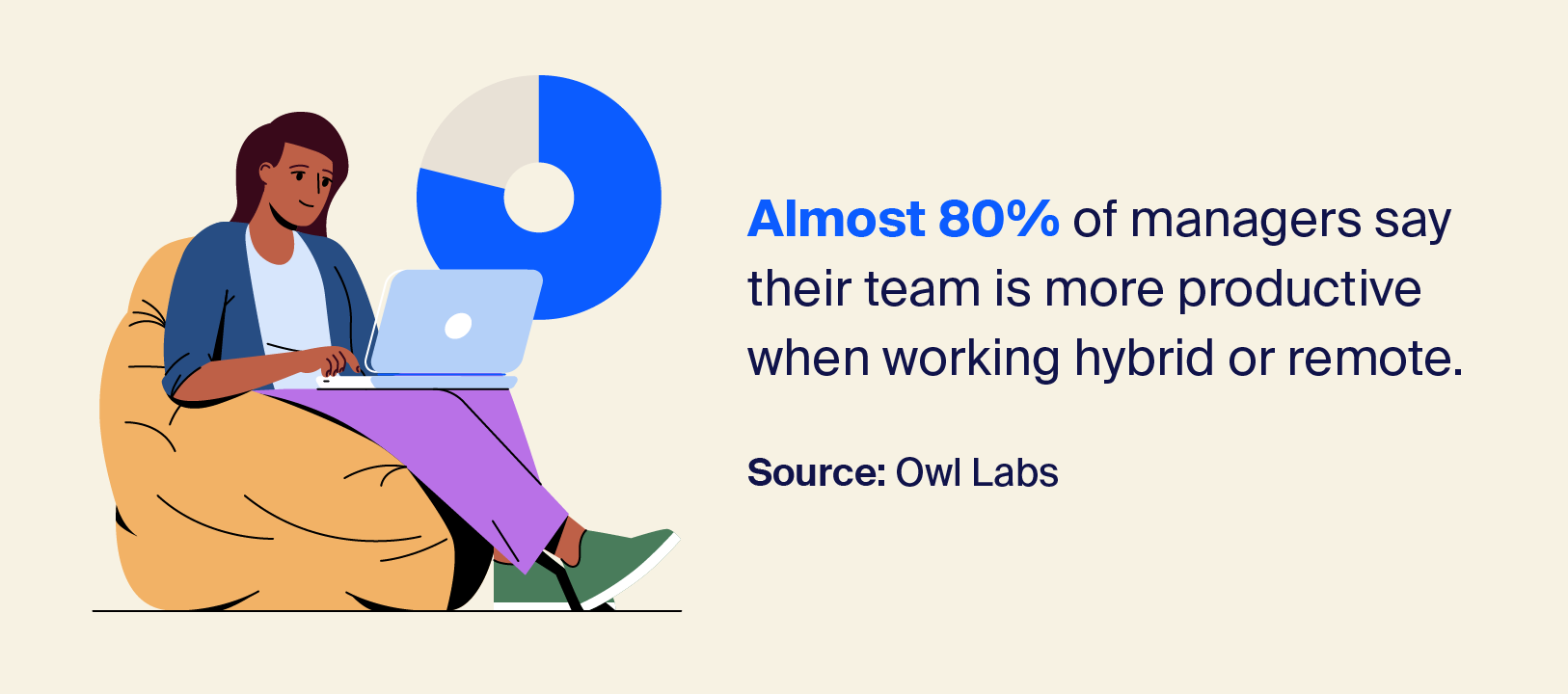
Research supports the notion that flexible work arrangements can positively impact productivity. The Owl Labs study revealed that over 90% of remote and hybrid employees say they’re just as or more productive in their current working style as they were in the office. This data challenges the traditional perception that in-office work is necessary for productivity.
Plus, Zoom’s research on hybrid trends suggested that 84% of leaders were influenced to change their workplace model (adding more flexibility) due to increased productivity.
Flexible work models can lead to substantial cost savings for businesses. Companies can reduce their reliance on physical office space and downsize their real estate, leading to significant reductions in rent, utilities, and maintenance expenses.
A hybrid work model also requires less office equipment and furniture, as employees bring their own devices and supplies when working remotely. This can result in cost savings on computers, monitors, desks, and office supplies. Research by GWA found that the average U.S.-based employer can save $11,000 every year for each remote worker on a two-to-three-day hybrid schedule.
Optimizing your office space and reducing equipment expenditures allows your business to allocate resources to other strategic areas, such as technology investments or employee development.
These days, the very offer of hybrid or remote positions can attract top talent from a wider geographic area rather than being limited to candidates within commuting distance. This increased access to skilled professionals allows companies to find the best fit for their team, regardless of location.
Flexible work options are particularly appealing to a younger workforce that values work-life balance and autonomy. Companies can attract top talent from the coveted millennial and Gen Z demographics. This diversity of perspectives and skills can contribute to a more innovative and dynamic workplace.
Ultimately, the ability to tap into a larger talent pool can give companies a competitive edge in today’s global economy. Plus, offering a hybrid structure may make it more likely to retain talented employees: 64% of employees report that a forced return to the office would negatively impact their trust in leadership.
Implementing a successful hybrid work model requires careful planning and execution. Several key elements contribute to the effectiveness of a hybrid work arrangement.
Flexibility is a cornerstone of successful hybrid work. Organizations should be adaptable enough to accommodate diverse employee preferences and work styles. This includes being open to trying a range of hybrid models and adjusting these models as needed.
However, flexibility extends beyond work schedules. It encompasses the ability to adapt to changing business needs, technological advancements, and economic conditions. A successful hybrid work strategy involves regularly assessing and refining policies, procedures, and tools to help align with the evolving workplace.
Leveraging the right collaboration platforms can bridge the physical distance between team members. Tools like project management software, instant messaging platforms, and video conferencing solutions can facilitate seamless information sharing, idea exchange, and decision-making.
Alongside unified communications (UC) technology, fostering a strong culture of collaboration can improve hybrid models. Implementing strategies such as virtual team-building activities, regular check-ins, and cross-functional collaboration initiatives can help build trust, strengthen relationships, and enhance overall team performance.
Key tools and platforms for hybrid work include video conferencing software, project management tools, cloud-based document-sharing systems, instant messaging applications, and other flexible collaboration tools.
Investing in robust technology infrastructure helps build a seamless flow of operations. Additionally, companies should prioritize providing employees with the necessary equipment and training to use these tools effectively.
|
“Hybrid work requires that leaders trust employees to do their best work, regardless of location. Investing in the right tools and technologies empowers employees and fosters a culture of autonomy and accountability.” — Richard Branson, founder of Virgin Group |
Emerging technologies like artificial intelligence and automation can also enhance the hybrid work experience. For example, virtual assistants can provide support, schedule meetings, and compose emails and documents, while automation can streamline routine tasks.
Outfit your workspace with the right technology to set your team up for hybrid success. This means designing your hybrid office space with flexibility and connectivity in mind rather than simply setting up a traditional space dedicated to in-person collaboration only.
Equip meeting rooms with hybrid-first technology, like cameras, microphones, and screens, so everyone can participate, whether they’re in the room or not. Be thoughtful about acoustics and consider designating certain rooms “hybrid collaboration rooms.”
Consider assigning desks to those who work from the office frequently while also providing “hot desks” for those who only make the occasional appearance.
| Zoom Rooms are designed for hybrid teams to create effective workspaces for collaboration. |
Because leading a hybrid team has some stark differences from traditional management of an in-person team, it’s crucial to effectively train your managers on what a hybrid job is and how to lead in one.
A successful hybrid manager prioritizes outcomes and performance over visibility, meaning they can assess an employee’s achievement of goals rather than simply monitoring their office hours. This requires developing clear expectations, communicating them effectively, and leading employees with autonomy and trust.
Manager training should also touch on inclusive communication, team-building strategies that work for hybrid teams, and how to mitigate unconscious bias that might favor in-office employees.
To successfully transition to a hybrid work model, organizations need to prioritize putting together a detailed and feasible plan prior to execution. Several key strategies can help your company maximize the benefits of flexible work while minimizing potential challenges.
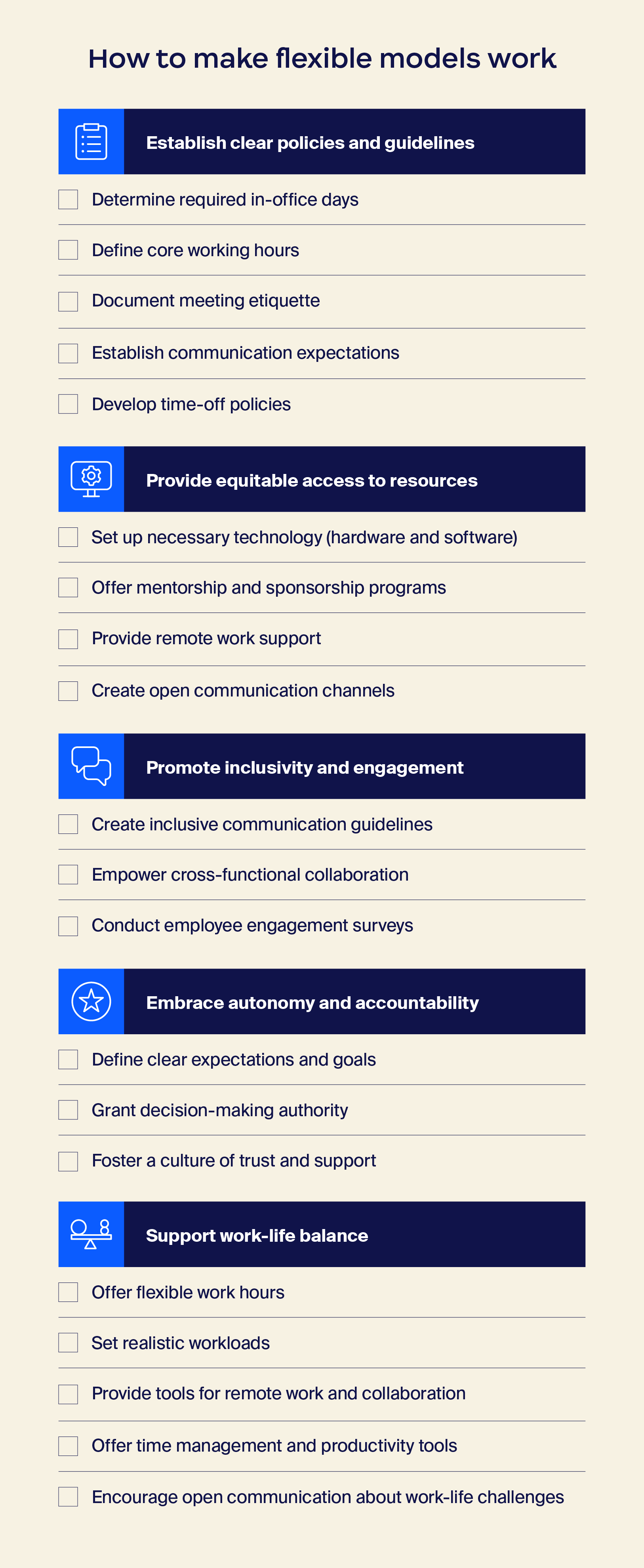
These guidelines should outline expectations for both remote and in-office work, including work hours, communication protocols, and performance metrics.
After you’ve established clear expectations, your business can avoid misunderstandings and keep all employees on the same page. Effective communication is an essential prerequisite for a thriving hybrid workplace, so it’s crucial to define communication norms and protocols, such as response times and meeting etiquette.
Pro tip: Document official policies and procedures, and be sure they’re accessible to all employees. Consider using Zoom Docs to easily create collaborative wikis, documents, and knowledge bases.
All employees, regardless of their location, should have access to the necessary technology, software, and support to perform their jobs effectively. This includes providing high-speed internet access, reliable devices, and ergonomic equipment.
Addressing digital equity is equally important. Companies need to identify and eliminate barriers that prevent employees from fully participating in the hybrid work environment. This includes providing training on technology usage, offering accessible tools for employees with disabilities, and providing remote workers with equal opportunities for professional development and career advancement.
Pro tip: Offer training in various mediums to help every employee learn in the best way for them. For example, you might offer training on the same subject via video, written documentation, and in-person meetings.
Organizations need to foster a culture of inclusivity where both remote and in-office employees feel valued and connected. Implementing strategies for virtual team-building, such as online social events, can help strengthen relationships and build strong ties.
The key to creating a positive and inclusive hybrid work environment is to encourage open dialogue, recognize employee contributions, and provide opportunities for growth and development.
Pro tip: Use tools to keep the team connected and collaborative. For instance, you can use Zoom Meetings for more than just face-to-face interaction with a distributed team — licensed host users can add engaging polls and collaborative whiteboards to work together effectively.
Give your team the freedom to own their work. When employees have the autonomy to manage their time, tasks, and processes, they often feel more engaged and invested in their roles. This empowers them to think creatively, solve problems independently, and take ownership of their outcomes.
However, autonomy must be balanced with accountability in the form of clear performance expectations, regular check-ins, and outcome-based evaluations. Effective communication and collaboration tools can facilitate accountability and transparency in a hybrid work model.
Pro tip: Focus on performance and outcomes, rather than just employee schedules or work hours. When you and your employees all understand what strong performance looks like, there’s more room for flexibility and autonomy in terms of how the work gets done.
Prioritize work-life balance for the well-being of employees and the overall success of the hybrid work model. Foster a company culture that encourages employees to set boundaries between work and personal life. This includes providing flexible work arrangements, offering mental health support resources, and promoting time management strategies.
By investing in employee well-being, companies can reduce burnout, increase job satisfaction, and improve overall productivity. A healthy work-life balance is essential for attracting and retaining top talent in today’s competitive job market.
Pro tip: Lead by example and inspire the team with your own work-life balance. Talk about the importance of time off, block appointments on your calendar, and reiterate that you don’t expect 24/7 availability.
The hybrid work model is still evolving, shaped by ongoing experimentation and changing workforce dynamics. Zoom, alongside Reworked Insights, surveyed more than 600 IT and C-suite leaders and nearly 1,900 knowledge workers to create in-depth research into the future of hybrid and flexible work models. While hybrid is king today, we found that it stands to grow even further — 82% of business leaders say they plan to make their office’s work model more flexible in the next two years.
It’s driven by employees, too: 23% of leaders say they factor in employee preferences when setting the company’s flexibility options, while just 17% report that senior leadership has a bigger say. Here’s more:
To fully embrace the potential of hybrid work, organizations need a comprehensive platform that brings together all essential communication and collaboration tools.
Zoom Workplace offers an open collaboration platform with Zoom AI Companion that empowers teams to connect, collaborate, and innovate, regardless of location. From video meetings and Team Chat to Phone and email, Zoom provides a single platform for seamless communication and productivity.
And this isn’t only relevant to those working in a remote or hybrid model. Zoom’s robust feature set goes beyond the tools on your screen. Products such as Zoom Rooms and Workspace Reservation support every workplace dynamic and bridge that communication gap for hybrid teams, whether the entirety or a portion of the company works remotely.
Here are a few more responses to frequently asked questions about hybrid work.
Hybrid work doesn’t negatively impact employee productivity if it’s done right. When hybrid work is implemented thoughtfully, many studies show it can boost productivity due to fewer distractions and better focus while working from home, more autonomy, and increased job satisfaction.
However, productivity may suffer if hybrid work is implemented with poor communication, a lack of expectations, or inequity.
The most common challenges faced by businesses with hybrid work models include:
The main difference between hybrid and remote work models is location flexibility. Hybrid models require some time in the office in addition to remote work, while a fully remote model is entirely offsite and does not require time in the office.