In a year full of uncertainty, faculty, staff, educators, and administrators worldwide have had to adapt to support new ways of teaching and learning remotely.
We know it hasn’t been easy, and we’re grateful to everyone in the educational community that has worked so hard to help students of all ages connect, learn, and stay engaged, whether they’re in the classroom or at home. From the bottom of our hearts, thank you for everything you’ve done and continue to do!
It’s been a busy 2020 for our education team at Zoom, too. From releasing many new features, to specifically helping educators, to providing Zoom to over 125,000 schools in 25 countries for free during the pandemic, to hosting our first Zoom Academy with tens of thousands of attendees from around the world, we’re proud to have worked closely with and supported educators, schools, and universities.
Read on for a look back at what we did together in 2020.
New features to help educators teach, learn & connect
We introduced a number of new features across the board this year. Here are some of our favorites for education:
Engagement features
Reordering videos in Gallery View — teachers can drag and drop video tiles and lock them into a fixed configuration to create a virtual seating chart for their classroom.
Multi-pinning — users can pin up to nine videos on screen in their custom personal view, improving accessibility for students who are deaf or hard of hearing by allowing them to pin both their teacher and sign language interpreter.
Multi-spotlight — teachers can spotlight up to nine participants during a Zoom session, which allows a group of students to present to the class together.
Unmute with consent — students can give a teacher permission to unmute them, which helps very young students, students with special needs, and other use cases.
Breakout Room flexibility — students can select which Breakout Room they want to join and move between rooms. Co-hosts now have the same Breakout Room controls as the meeting host.
Slides as a virtual background — presenters can share their PowerPoint or Keynote slides as a virtual background and overlay their video on top.
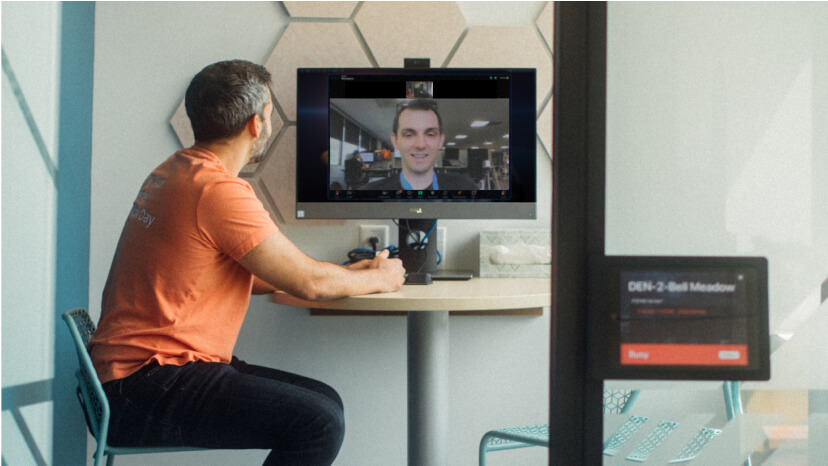
Zoom Rooms features — Zoom Rooms classrooms can show up to 49 users on Zoom Rooms screens, join Breakout Rooms from Zoom Rooms, and save whiteboards to chat on Zoom Rooms touch.
High-Fidelity Music Mode — performing arts and music teachers can provide lessons with professional-grade audio using High-Fidelity Music Mode.
https://vimeo.com/454863596
Security & privacy features
Security icon — in April, we introduced the Security icon to simplify how teachers and other hosts can find and enable in-meeting security features like locking the meeting, enabling the Waiting Room, removing participants, and restricting participants’ ability to share screens, chat, rename themselves, or annotate shared content.
Suspend participant activities — hosts and co-hosts can temporarily pause their meeting to remove disruptive participants.
At-risk meeting notifier — this tool helps identify which meetings may be at risk of being disrupted by finding publicly posted meeting information and notifying account owners and admins by email.
Chromebook accessibility
Chrome Web Store app — we updated the Zoom Chrome Web Store app in September to optimize CPU usage for all Chrome devices, so everyone using Zoom on a Chromebook has an easy-to-use, reliable experience. We’ve also dedicated further resources toward improving the Chromebook experience.
Find blog articles related to these feature updates here:
We held our first Zoom Academy in July, bringing together a diverse group of K-12, primary, and secondary educators from around the world to learn from each other, share resources, and discuss insights into teaching remotely. You can check out all the takeaways from our two-day virtual event in our blog recap — or watch the recordings to earn your Zoom K-12 Summer Academy badge.
At our annual Zoomtopia user conference, which went virtual for the first time this year, we had an entire educational track chock-full of content and insightful discussion on the future of education. Sessions covered everything from leveraging school funding to designing blended learning environments. Leaders from Arizona State University, Colorado State University, and Harvard University joined us for a panel to share their experiences delivering remote learning during the pandemic. Visit the Zoomtopia website to watch all recordings on demand!
Our favorite stories from education
We love hearing about how schools and universities have used Zoom to continue serving students and families during a challenging year. Here are a few of those stories:
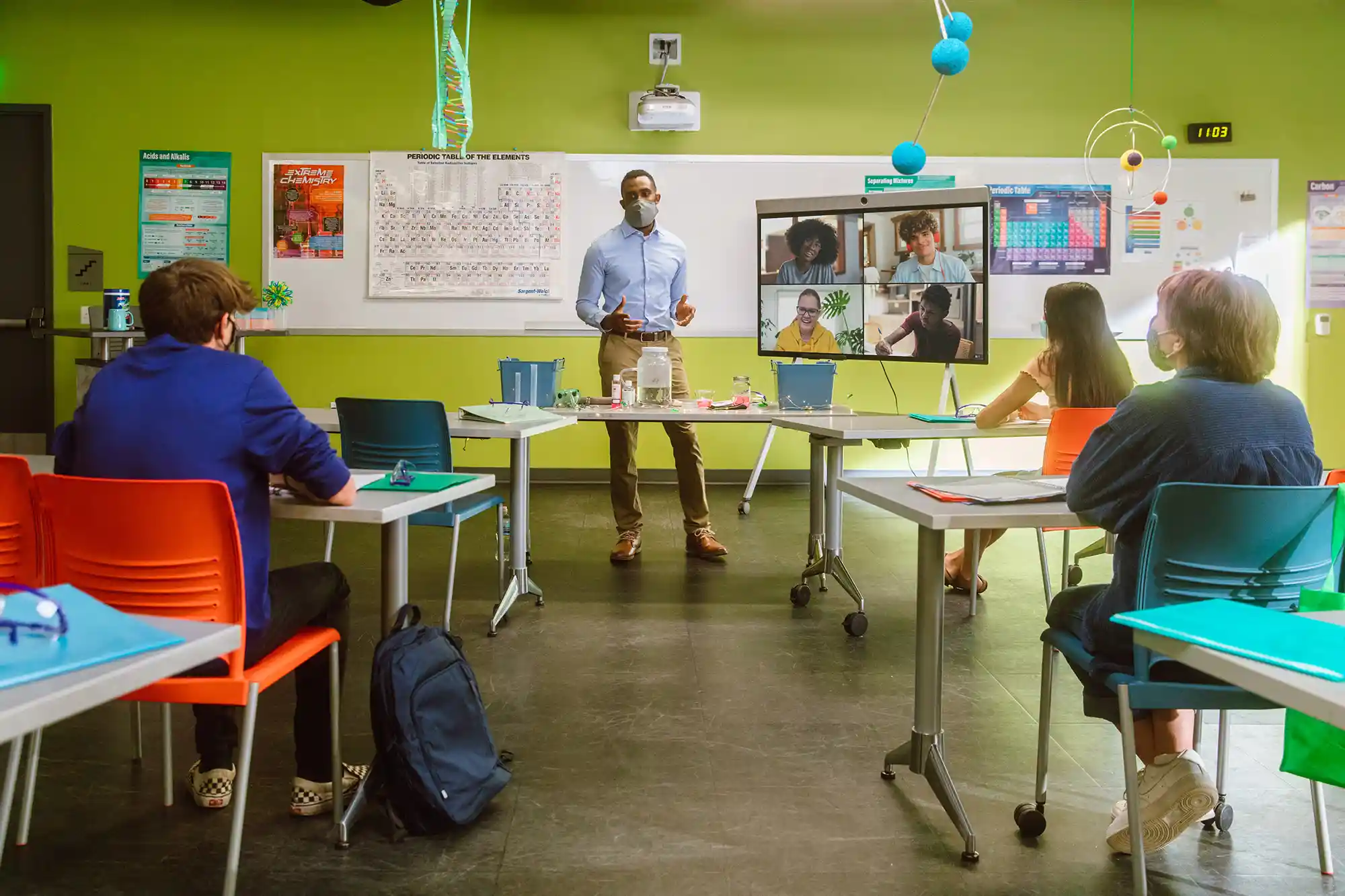
Quinnipiac University uses Zoom Phone for campus communication, Zoom Chat, and Zoom Webinars for large events like commencement exercises and open houses. The university also built “Zoom Rooms on wheels” — mobile, video-enabled carts that allow faculty to interact with students in the classroom and at home simultaneously.
Monte Vista Christian School in Watsonville, California, introduced Zoom early on in 2020 to prepare for a challenging new reality brought by the COVID-19 pandemic. Using Zoom Rooms and DTEN video boards, teachers could engage students in subjects that require lots of interaction, like theater, music, and physical education.
Teach for India educators faced significant technical challenges when it came to delivering distance education to their students. Zoom provided an easy-to-use, accessible platform for students connecting on mobile devices with low bandwidth and helped offer experiences beyond the classroom.
Giving back: our commitment to education
Our employees are passionate about education. They’ve steered us to support education as one of the foundational pillars of Zoom Cares, our philanthropic entity, which we launched earlier this year.
School closures have impacted up to 1.6 billion students around the world during the COVID-19 pandemic. We invested over $1.5 million in back-to-school remote learning grants, supporting organizations like Annenberg Institute for School Reform, Education Leaders of Color, Education Superhighway, International Society for Technology in Education, Profound Gentlemen, and Teach For All in their work to improve connectivity and bridge the digital divide to make virtual learning more accessible for all.
Looking forward to 2021
It’s amazing to look back at what our customers and partners in education have accomplished in 2020. The new year brings more opportunities to connect and reimagine what learning will look like going forward, even when many of us return to the classroom, and we’re excited to continue the journey with you in 2021.
Stay in touch with us on social media and follow our blog for the latest education features and customer stories.








 7 min read