
ZoomMate 入门指南
开始使用 ZoomMate 所需的一切资源:笔记、搜索、工作流程和 AI 工具——尽在 Zoom Workplace。
VoIP 允许您通过互联网而非固定电话来拨打电话。了解其工作原理、利与弊、主要功能以及如何切换。
 8 阅读分钟数
发布日期 2024年7月16日



| VoIP 的全称是什么? VoIP 是互联网语音协议 (VoIP) 的缩写。您可能会听到它被称为 Voice over IP 或 IP 电话通讯,但这三个术语的意思相同——通过互联网而非传统电话线路进行的呼叫。 |
The shift away from old-school phone lines has opened the door to faster, smarter ways to stay in touch. Voice over Internet Protocol (VoIP) routes calls over the internet, giving you clearer audio, flexible setup options, and features that traditional systems struggle to match.
采用率持续加速——最新 VoIP 统计数据显示,到 2034 年,美国 VoIP 市场规模预计将达到近 1,520 亿美元,全球市场规模预计将达到 4,152 亿美元。
In this article, you’ll get a quick, practical look at what VoIP is, how it works, and the advantages and tradeoffs to keep in mind. We'll also cover the features that help teams communicate more efficiently.
VoIP is a technology that lets you make phone calls using the internet instead of traditional phone lines.
Unlike regular phones, which rely on physical wires, VoIP converts your voice into digital data and sends it over the internet to the person you’re calling. It works similarly to sending an email but transmits your voice instead of text.
在 VoIP 设置中,组织通常管理和维护自己的 VoIP 系统(例如 Zoom Phone),其中包括必要的硬件、软件和基础设施。这种方法既能降低成本,又能确保团队的沟通模式更为灵活。
The voice calls you make over Wi-Fi or mobile data are a simple example of VoIP in action. While many apps use this approach for personal communication, the same concept extends for professional use through an IP phone system.
Solutions like Zoom Phone use VoIP technology to provide reliable calling, business numbers, call routing, and other features that help your business manage call workflows more efficiently.
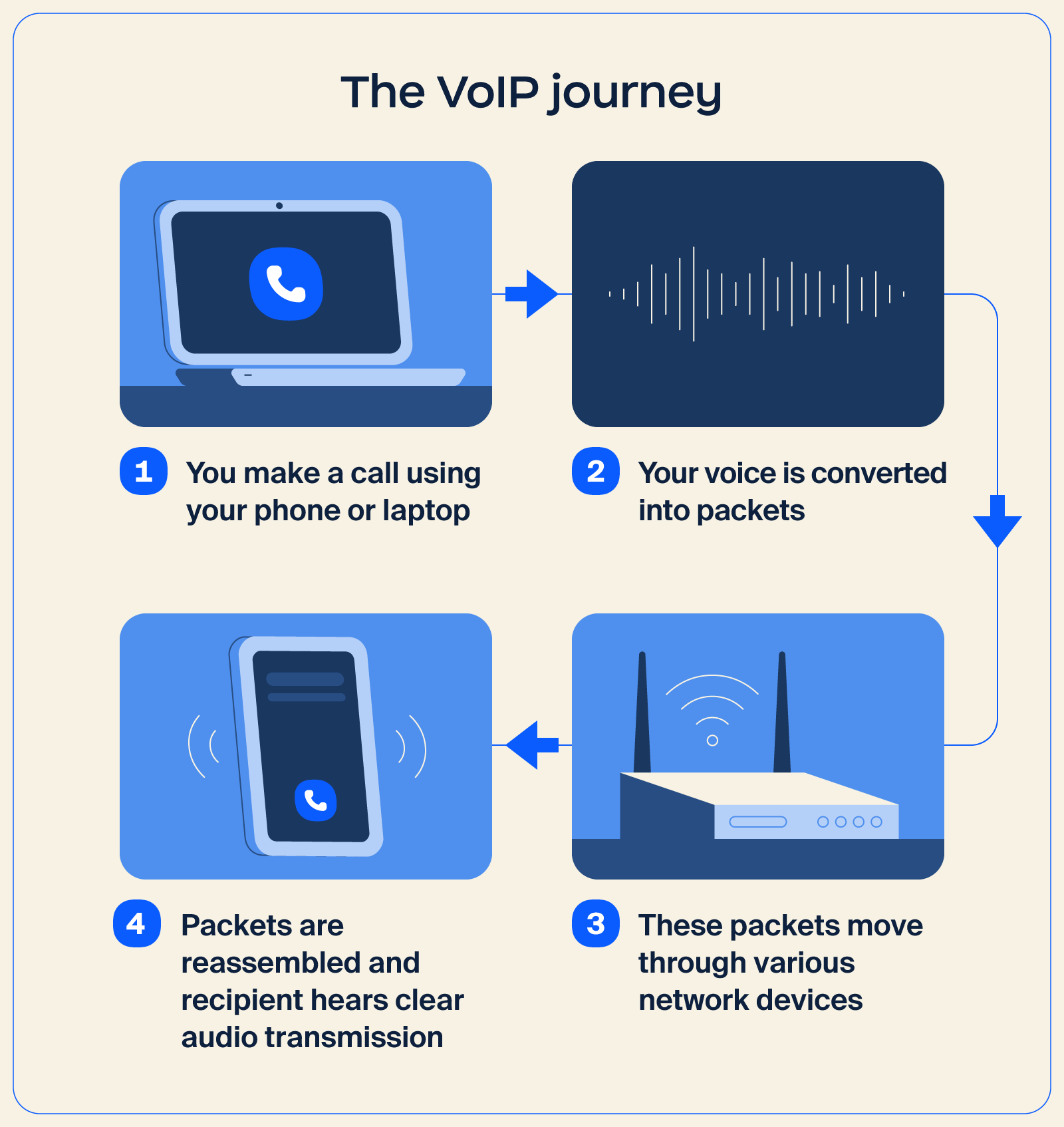
Here’s how VoIP works behind the scenes:
VoIP can transform your business communication by replacing fixed phone lines with an internet-based system that’s easier to scale, manage, and adapt. This is especially useful for teams that want a flexible setup or use a Bring Your Own Carrier (BYOC) approach, since everything runs on a cloud-based foundation.
There are also a few tradeoffs to consider, particularly surrounding connection quality. Here’s a closer look at both sides:
| Pros | Cons |
|
|
If your team wants modern calling features, simpler management, and room to grow, VoIP offers a strong foundation. Teams see the strongest results when VoIP is paired with a stable internet connection and a provider that fits their workflow.
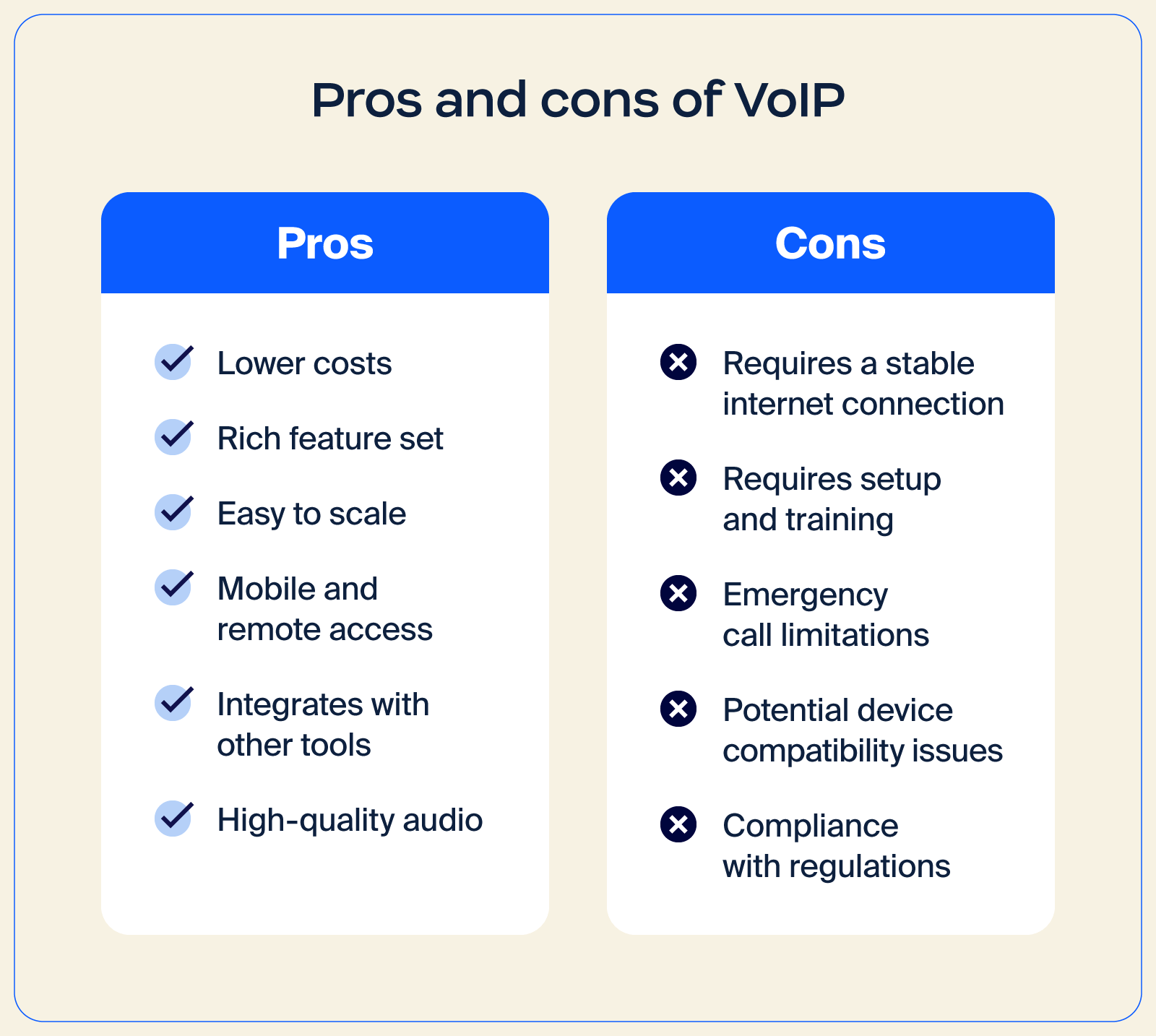
虽然 VoIP 有很多优势,但它也有一些缺点和局限性。让我们来探讨一下您可能会遇到的一些挑战:
正在寻找能满足您所有通信需求的 VoIP 电话系统?以下一些功能可以使您的业务通信更加轻松:
想象一下,将全部沟通工具整合至同一平台。统一通信可打通会议、电话与 Zoom Chat,实现无缝联动,相当于为团队协作配备功能完备的指挥中心。
自动接线员(有时也称为自动话务员)会接待呼叫者,并自动将其转接至合适的人员或部门——全天候运行,无需专职前台员工。借助 Zoom Phone,您还可以添加 AI 接线员(作为附加组件提供),无需实时坐席参与即可处理非工作时间呼叫、安排预约并解答常见问题。
桌面端与移动端均可适配,您外出途中也能保持沟通畅通。无论您身处工位还是在外出途中,均可通过任意兼容设备接入 VoIP 电话系统,避免错过重要来电。
依托加密与完善的安全防护手段,保护您的敏感沟通内容。它就像一个安全的通话保管库,保障您的对话私密不泄露。
VoIP 可提供高清音频,其效果通常优于标准固定电话呼叫——前提是互联网连接稳定。现代编解码器和自适应质量工具有助于将轻微网络波动的影响降至最低。
现代 VoIP 平台的功能远不止基础通话。例如,Zoom Phone 包含通话摘要、语音信箱待办和语音信箱优先级排序功能,可助您保持专注和更快响应——让您可以专注于开展业务,而无需费时查看通话记录。
借助 Zoom Phone 的全套通话功能,您可以享受灵活的移动云电话系统,兼具集成、高清语音质量、通话录制和移动应用访问。
VoIP and traditional landlines both handle business calling, but they work in very different ways. VoIP runs over the internet, making it easier to scale and manage, and is typically packed with features that help teams in today’s workplace communicate more efficiently.
Landlines rely on physical phone lines, which limit flexibility and make it harder to support modern workflows. Additional differences include:
| Category | VoIP | Landlines |
| Startup cost | Usually lower, especially for teams already using cloud tools App download is free; optional adapter cost: $20-$50 |
Can be higher due to hardware ($50-$100) and on-site phone installation ($40-$100) |
| Monthly fees | Often more predictable and budget-friendly Per user estimate: $15-$40 + taxes/fees |
Can increase with long-distance and maintenance charges Per line estimate: $20-$60 + taxes/fees |
| Call quality | High quality with a stable connection | Consistent, backed by physical infrastructure |
| International calls | More affordable — lower per-minute rates, often in cents | Higher rates — $1+ |
| Features | Rich capabilities, including call routing, voicemail transcription, and video options | Limited features |
| Unified communications | Can support meetings, phone, and chat in one place | Not designed for integrated communication |
| Security | Enterprise-grade security and protection are normally built in | Dependent on carrier systems |
| Other considerations | Easily scalable and adaptable to changing needs | Less flexible and harder to expand |
All in all, VoIP stands out for businesses that want a flexible IP phone system with modern workplace features. Landlines still offer steady reliability, but they lack the flexibility, speed, and range of capabilities that VoIP platforms offer for everyday communication.
将迁移到 VoIP 的过程分解成清晰的步骤,就能简化这一流程。您将规划需求、检查连接、选择提供商、部署所需设备,并完成部署设置。
如果您曾在测速时观察到抖动,就会明白互联网对通话质量的影响,因此及早优化网络有助于充分发挥 IP 语音配置的性能。
首先绘制团队沟通模式。查看通话量、远程办公需求、现有工具,以及任何适用的安全规则。例如,受 HIPAA 法规约束的医疗保健机构可能会寻找具备加密通话和受控访问通话记录等功能的 VoIP 提供商。
接下来,制定清晰的预算。供规划参考的预算估算:
利用这些估算值,比较投资金额与潜在收益。许多组织在切换为 VoIP 后,都取得了可衡量的成本和基础设施收益。例如,选择 Zoom Phone 后,Flex 减少了 50%-70% 的全球电路和基础设施,从而降低总体拥有成本。
如果您的现有配置无法满足需求,请考虑进行小幅升级。更新的路由器、更强的 Wi-Fi、或不同的 ISP 均有助于减少通话掉线,并最大限度减少对话过程中的抖动。
优秀的 VoIP 提供商能够支持企业当前的运营模式,同时仍留有发展空间。在比较不同选项时,请留意以下要素:
您还要确认移动应用支持服务、国际通话选项以及任何地区限制。Zoom Phone 是一个灵活的云电话系统,它专为移动办公而打造,兼具实用集成、AI 优先生产力工具以及高清语音质量。此外,它还具备 VoIP 电话功能(例如通话录制、语音邮件转写和移动访问),可助您轻松管理日常通信内容。
选定提供商后,请准备好顺利完成部署所需的设备,包括:
您的提供商将指导您完成部署,通常包括功能快速演示和用户培训。如果您保留现有号码,他们会负责办理携号转网手续。如果您不保留现有号码,则可在您的网站、电子邮件签名和客户渠道中共享新的号码。
一旦所有设备连接完毕,您的团队就能使用新的 VoIP 系统拨打和接听电话,并顺利过渡到日常应用,最大限度减少中断。
VoIP 的全称为 Voice Over Internet Protocol,即互联网协议语音。这是一种让您能够通过宽带互联网连接拨打和接听电话,而非使用传统固定电话线路或模拟电话线路的技术。您可能还会听到它被称为 IP 电话通讯或互联网电话通讯。
VoIP 非常经济实惠。许多套餐的价格约为 10–40 美元/用户/月。如果您添加设备或额外功能,费用可能会有所增加。设置通常免费或成本极低,这使得 VoIP 在前期通常比传统电话系统要经济实惠得多。
是的——许多手机可以通过 Zoom Workplace 等应用使用 VoIP。连接到 Wi-Fi 时,这些应用会通过互联网而不是蜂窝网络转接呼叫,从而降低成本并解锁额外的通话功能。
可以。大多数 VoIP 提供商都支持携号转网,因此您可以将现有的业务电话号码转移到新系统。
当提供商应用当前的安全措施时,VoIP 可以提供比传统固定电话更完善的保护措施——包括加密、基于角色的访问控制和合规性工具。安全体验在很大程度上取决于您选择的提供商。
标准 VoIP 描述的是技术本身。托管型 VoIP 系统(也称为云电话系统)意味着提供商会为您管理基础设施——您只需使用该服务。如今许多商业 VoIP 解决方案(包括 Zoom Phone)均采用托管模式。