
Twój przewodnik na temat rozpoczynania pracy z ZoomMate
Wszystko, czego potrzebujesz, aby zacząć korzystać z ZoomMate: notatki, wyszukiwanie, przepływy pracy i narzędzia AI – wszystko w Zoom Workplace.
 5 min czytania
Opublikowano 19 lipca 2024




If you want more leads and increased revenue, you've got to set yourself apart. But with plenty of competition and constant changes in the business world, how do you stand out?
Webinars are an excellent option. In fact, based on TwentyThree's research, 80% of companies polled said they're either increasing their webinar budget in 2026 or keeping it the same as in 2025, which is strong evidence of their effectiveness. Whether you want to engage more leads, share information, or simply raise brand awareness, webinars can help.
In this post, we'll delve into 42 webinar statistics that highlight why webinars are great for marketing. We have stats on key fields like webinar length, average webinar conversion rate, and average webinar attendance rate, so you can explore strategies for improving webinar attendance and hosting engaging and memorable webinars.
Webinary stały się narzędziem nowoczesnych strategii marketingowych i komunikacyjnych. Poniższe dane statystyczne dotyczące webinarów przedstawiają aktualną sytuację w tej dziedzinie i dostarczają wiedzy, która pomoże Ci usprawnić działania dzięki wykorzystaniu najlepszych platform do organizacji webinarów.
Oto ogólne statystyki dotyczące webinarów:
With changing technology and increasing advances in AI, does webinar data show that webinars are still worth it in 2026? In short, absolutely.
Oto garść przekonujących danych liczbowych na potwierdzenie tej oceny:
12. The average live webinar attendance rate is 49%, meaning nearly half of registrants show up to watch. (Univid)
13. Total webinar attendance (including replays) reaches about 57%, showing ongoing engagement beyond the live event. (Univid)
14. Ninety-two percent of event professionals say improving post-event follow-up is a top priority for maximizing ROI. (Forrester)
15. Between 2025 and 2026, there has been nearly 20% growth in the number of organizations integrating webinars into their marketing plans. (TwentyThree)
16. Sixty-six percent of companies that create webinars say webinars are extremely or very important elements of their digital strategy. (TwentyThree)
17. Webinars have an average conversion rate of 63%. (TwentyThree)
Siła webinarów różni się w zależności od branży. Niektóre sektory w dużym stopniu na nich polegają, podczas gdy inne preferują inne metody. Zagłębienie się w statystyki dotyczące webinarów branżowych pomaga zrozumieć, które dziedziny są najbardziej aktywne w tej przestrzeni i jak różnią się tematy przedstawianych treści.
Here are some industry-specific webinar stats:
29. One analysis showed that the industry with the highest attendance rate is pharmaceutical (50%), while the lowest are software and services (28%), diversified capital markets (20%), and education services (20%). (Banzai)
30. Sixty-seven percent of organizations creating webinars use them to educate customers and improve their experience, with lead generation coming in second at 65%. (TwentyThree)
31. Sixty-five percent of marketers repurpose webinar content, which is a time-saving, money-saving, and audience-building tactic. (Kaltura)
32. Startups with under $1 million in revenue see half the attendance rate of companies with $1 million to $10 million in revenue. (Banzai)
33. For marketers, 24% report that webinars are their most important tool and play an important strategic role. (Kaltura)
34. Twenty-five percent of webinar-creating organizations plan to spend more on webinars going forward, with 55% planning to spend about the same amount. (TwentyThree)
35. The virtual events industry is expected to reach a value of around $1.03 trillion by 2032, at a compound annual growth rate of about 14% between 2023 and 2032. (Custom Market Insights)
36. Marketing teams use webinars the most (85%), with sales (71%) a close second. The lowest use comes from design (9%) and HR/recruitment (8%). (TwentyThree)
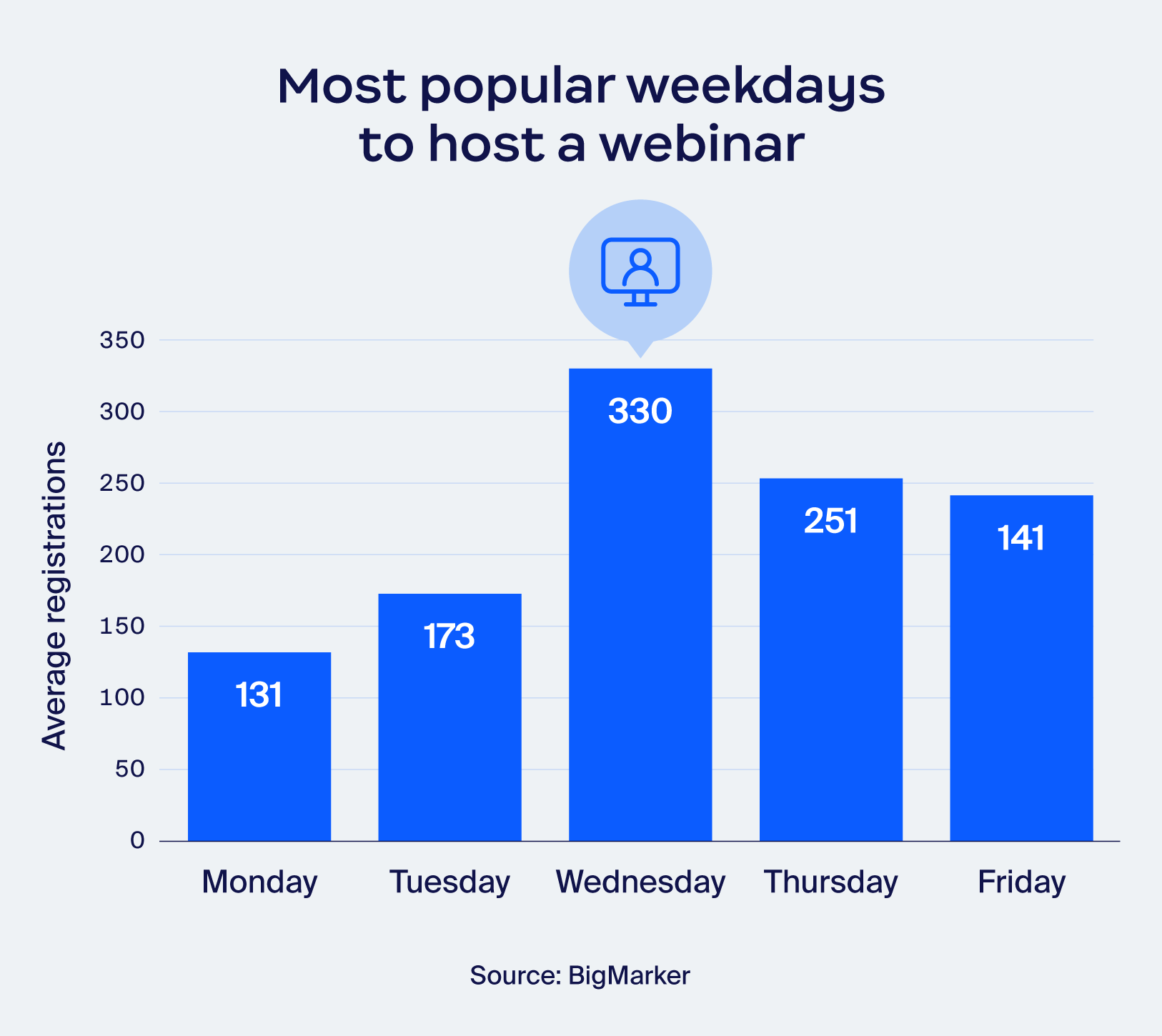
Webinars are no longer simple online presentations. The key to unlocking their potential lies in conversions — turning viewers into active participants who take the next step in their journey with your brand.
Here are some webinar benchmarks related to conversion:
| Wskaźnik | Średnio | Źródło |
|---|---|---|
| Wskaźnik uczestnictwa na żywo | 49% | Univid |
| Całkowita frekwencja (na żywo + powtórka) | 57% | Univid |
| Współczynnik konwersji z webinarów na żywo | 63% | TwentyThree |
| Wskaźnik konwersji na żądanie | 19% | TwentyThree |
| Wskaźnik konwersji CTA | 22% | Univid |
| Optymalna liczba CTA dla maksymalnej konwersji | 2 CTA (25%) | Univid |
| Najwyższa konwersja CTA według wielkości grupy odbiorców | 50–100 uczestników (26%) | Univid |
37. Webinars attract an average of 308 sign-ups, with a 58% attendance rate. (TwentyThree)
38. The average conversion rate of live webinars is 63%, and the average on-demand conversion rate is 19%. (TwentyThree)
39. The average webinar conversion rate of webinar CTAs is 22%, meaning roughly 1 in 5 attendees take the desired next step after the event. (Univid)
40. Having 2 CTAs gets you maximum conversion (25%). (Univid)
41. Webinars with 50-100 attendees see the highest CTA conversion rates, averaging 26%. (Univid)
42. Fifty-two percent of marketers say first-party data improves targeting and personalization, both key drivers of higher conversion rates. (Content Marketing Institute)
Zoom Webinars is designed to help you move beyond basic presentations and deliver structured, engaging experiences that audiences actually remember. Whether you're hosting Zoom Meetings or Zoom Webinars, you can scale participation, manage interaction, and maintain a professional environment from start to finish.
With Zoom Webinars, you can create immersive online experiences that drive knowledge sharing, collaboration, and dynamic audience interaction. And when you're ready, you can go bigger and upgrade your single-session virtual events with Zoom Webinars Plus to support multi-session programming, deeper engagement, and stronger brand experiences.