The key to succeeding in the generative AI era lies in leveraging real communication data.

NEC Logo
Established :

1899

Head Office Location :

5-7-1 Shiba, Minato City, Tokyo

Industry :

IT services, social infrastructure

Deployment Solutions:

Zoom Meetings, Zoom Phone, Zoom AI Companion, Zoom Rooms, Zoom Webinars, etc.

Challenges & Solutions:

The maintenance deadline for on-premises PBX was approaching, and an immediate replacement was required.Although the number of tasks requiring desk phones is decreasing, certain roles necessitate office attendance, which impedes flexible work styles despite the growing adoption of hybrid work. The actual usage status of the PBX environment distributed across the country was not fully understood, and analysis of the current situation for cost optimization and operational efficiency was neglected. Further, the accumulation and utilization of real-time communication data essential for adapting to the AI era were insufficient. Implementation results:


With the introduction of Zoom Phone, a smooth communication environment was realized, whether in the office, at home or on the go. Stable high sound quality was maintained even in areas with unstable network environments, and employees highly appreciated the improvement in sound quality. Simple and intuitive operations minimized the stress of migration. Desk phones were consolidated to only the necessary number, achieving a cost reduction of approximately 70% in telephone-related expenses, including call charges. An environment for accumulation and analytics of real communication data was also established, laying the foundation for utilizing generative AI and building a knowledge base.

Products used

Why NEC chose Zoom Phone for 110,000 users.

The challenge of increasing data value, aiming to create a society where people and AI work together in harmony. NEC, one of Japan's leading technology companies, is undertaking a large-scale transformation of its communications, replacing 110,000 telephones at one time, achieving cost reductions of approximately 70%.


In spring 2025, NEC introduced the cloud PBX "Zoom Phone" for approximately 110,000 employees at its Group companies in Japan. The transition was completed efficiently in about one year, during which time the equipment and number of lines were thoroughly reviewed. This resulted in a significant reduction in call costs by approximately 70%.


The objective was not merely cost reduction. Having already transformed their work style with Zoom Meetings as a primary focus, the company's next aim was to establish real communication even more aligned with the generative AI era.


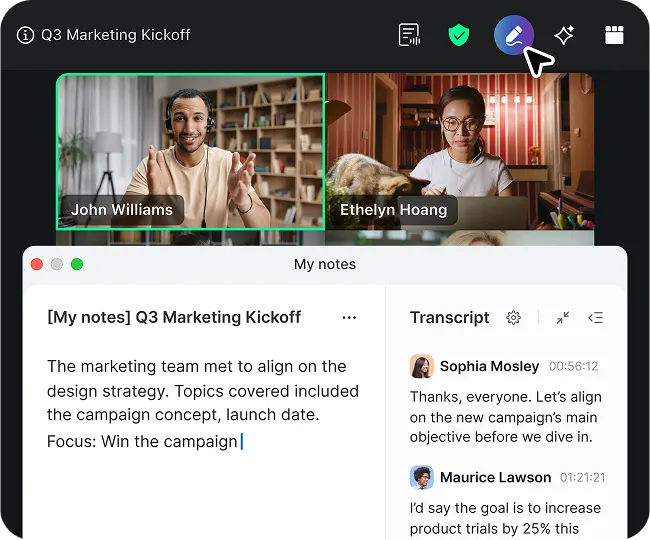
By converting the audio from web meetings and phone calls into text data, it is now possible to share and perform analytics on internal and external interactions more precisely. The company envisions a future where generative AI is used to perform analytics on real-time communication data daily, leading to improved efficiency and growth.


We learned about the background of the large-scale implementation of Zoom Phone for 110,000 individuals, NEC's reasons for adopting the Zoom platform, alongside the current state and future outlook of communications in the era of AI.

NEC

(Photo from left) Koki Yoshida, NEC Finance and Public Solution Division Manager; Hiroshi Kodama, NEC Corporate EVP and CIO; Kazuhiro Oguchi, NEC Digital ID & Workflow DX Management Division Senior Director; and Takeshi Shimizu, NEC Manager

Continuous change as NEC's DNA: Transformation through structural reforms

NEC's mission is to create the social values of safety, security, fairness and efficiency with technology at its core. Founded in 1899 as Japan's first joint venture with a foreign company, NEC has continued to operate over 125 years of history while adapting to evolving eras and environments.


In the 2010s, business environment shifts including intensified competition in the hardware business and the rise of cloud computing caused the company's profit structure to deteriorate, forcing it to restructure. The company accepted the difficulty as an opportunity to re-examine itself, and embarked on bold structural reforms, while at the same time reforming its essential corporate culture. The company has been promoting reforms with the determination to "make continuous change its DNA."


The concept born during this transformation process was "Client Zero."The strategy involves positioning the company as the first client, demonstrating cutting-edge technology and sharing the "living" knowledge gained with customers and society. Hiroshi Kodama, Corporate EVP and CIO of the company, stated, "The knowledge and expertise that NEC has gained through its own practices have been trusted and well received by customers."


These accumulated reforms have proven successful. As of 2025, the company has achieved its performance targets for eight consecutive terms, and its market capitalization has increased eightfold since 2017.


"NEC aspires to lead digital transformation for society as a whole, adopting a Client Zero approach and focusing on cutting-edge fields such as communications, AI, biometric authentication and cybersecurity," says Kodama.

Maximizing individual power as starting point for digital transformation (DX)

First and foremost, theory must be put into practice to accumulate practical knowledge. Kodama defines DX as "not merely digitalization or IT adoption, but the execution of fundamental corporate reforms."


"Our goal for DX is to increase employee engagement, build an organization that takes on challenges with an agile culture, and create new social value independently. We believe that maximizing the 'power of the individual' by creating an environment for better communications will transform the organization, generate new value and lead to the success of DX," says Kodama.


Under this policy, NEC is gradually advancing communication reforms, with the first step being the establishment of a "location-free environment" enabling seamless communication regardless of whether one is in the office, at home or on the move.


At the time, the cornerstone of this reform was Zoom's “Zoom Meetings.” Kazuhiro Oguchi, Senior Director of the Digital ID & Workflow DX Management Division, reflects as follows.


“When the way we work completely changed due to the COVID-19 pandemic, Zoom Meetings became a crucial foundation supporting internal communication.In addition to high-quality communication, its intuitive operability that anyone can master is a unique strength among tools specifically designed for communication. This ease of use was also a major deciding factor in selecting Zoom Phone as cloud PBX.”

Three reasons why NEC chose Zoom Phone

NEC's next communication initiative was to move its PBX to the cloud by introducing Zoom Phone.


The background included an approaching March 2026 maintenance deadline for on-premises PBX, reflections on the difficulty of continuing operations with conventional desk phones due to the COVID-19 pandemic, and the increasing importance of real-time communication data accumulation and analysis in the AI era. Above all, as the number of companies choosing cloud PBX was expected to increase in the future, NEC placed emphasis on implementing a "Client Zero" approach and acquiring truly imperative knowledge.


Mr. Oguchi recalls that the COVID-19 pandemic brought to light a number of problems with desk phones.


"With a traditional PBX system, even when a state of emergency was declared due to the COVID-19 pandemic, employees who needed to communicate via desk phone were required to come to the office. This could not be considered a flexible way of working," he states.


Consideration of replacement began in 2023, but it became evident that even basic usage information, such as who was using each desk phone, for what purpose, and how frequently they were being used, was unknown.


When NEC investigated sales offices across Japan, they discovered many lines where it was unclear who was actually using them, or whether they were truly necessary.

"There are three main reasons why we chose Zoom Phone from the many cloud PBX options available," explains Takeshi Shimizu, manager of the Digital ID & Workflow DX Management Division and one of the individuals who led the implementation project.


The first is sound quality. While considering multiple services, Mr. Shimizu noted that although there was little difference under stable network conditions, the sound quality of the Zoom Phone stood out in environments with poor network conditions, such as on the road or at home.


The second point is simple and easy-to-understand operability. Since the telephone is a simple and everyday tool, it would be counterproductive if the transition made it more difficult to use.


For example, the company often requires that calls to a department's main number be answered by someone on the team, so it was important that the UI be easy to understand so that the person answering the call could intuitively and quickly transfer the call to another assignee.


"With other services, the forwarding button is located deep inside the menu hierarchy, and it can be difficult to press right away. Zoom Phone's smartphone app is easy to use, and there were no problems, such as accidentally hanging up the phone when forwarding, which was highly praised by users on site," says Shimizu.


Operations that were previously possible only with a desk phone can now be performed from a PC or smartphone (*Projected on a monitor for filming purposes). The third point is cost. When NEC introduced Zoom Phone in-house, they were able to reduce both initial and running costs compared to a physical PBX. In addition, Zoom Phone can store unlimited audio data from calls. Zoom's unique AI capability "Zoom AI Companion" being installed as standard for each user is also an attractive benefit.

70% reduction compared to conventional methods: Significant cost savings by eliminating physical PBX

When introducing Zoom Phone, the PBX environment scattered across the country was inventoried, same-number migration settings were configured, and carrier lines were consolidated into the data center.


In particular, the migration of 110,000 people was successfully completed in approximately 10 months by conducting an inventory of the PBX environment and configuring cloud PBX settings. This was achieved by appointing an assignee in each department to carefully confirm the usage status of each business division and address detailed needs.


Takanori Yoshida of NEC Networks & System Integration Corporation's DX Solution Division, who provided hands-on support for this large-scale migration, states that the Zoom team's proactive approach in understanding the implementer's needs and responding promptly was crucial to project success.


"The Zoom teams, including the US headquarters, were very flexible and attentive to the technical aspects of the project, such as technical innovations to securely connect desk phones to the company network, and fine-tuning other functions to meet our requests," says Yoshida.


With the introduction of Zoom Phone, employees in the field can now answer company numbers and representative numbers of teams and departments, which were previously only available on desk phones, from their smartphones, and the management department can now monitor the usage status of calls in real time.


By eliminating the physical PBX and optimizing communication lines, the company significantly streamlined its internal facilities, achieving a significant reduction in overall telephone-related costs of 70% compared to the previous system.


In addition, "we are already seeing results in terms of cost savings, but the longer-term value is also significant," says Kodama.

What is NEC's vision for the future in the AI-native era?

With the spread of hybrid work, NEC has built a communication platform that connects internal and external business tools and services to support flexible work styles. Now, this initiative is evolving into the next stage of "data-driven generative AI," and NEC has even greater expectations for the Zoom platform and the data provided as its core.


Outputting meeting minutes and summaries that summarize the contents of business negotiations will not only lead to improved daily efficiency, but will also be used for further development. In the future, NEC plans to implement initiatives such as combining this data with existing stock data in the company, such as email history, business card information and project files, and reconstructing it as knowledge through their generative AI "cotomi" developed in-house.


"To fully utilize generative AI, fresh data is indispensable. The more real-life communication data we accumulate, the broader the scope of its application. We anticipate the new value that will emerge from the integration of diverse services with data obtained from the Zoom platform," says Oguchi.


In May 2023, the in-house generative AI environment NEC Generative AI Services (NGS) was launched as the foundation for these efforts. Under strict governance and compliance, an environment at NEC has been created where employees can safely use the services. NGS currently has integration with 167 internal systems through APIs, and is equipped to use multiple large language models (LLMs), including "cotomi," depending on application.


"This initiative is focused on how to transform vast amounts of data we hold into valuable knowledge for our customers and society. By reading a variety of internal and external information and reconstructing it as knowledge with generative AI, we will sublimate the data that Zoom can obtain into more practical and meaningful knowledge," says Kodama.


Communication platforms such as Zoom are the foundation for building and utilizing such knowledge infrastructure. NEC's partnership with Zoom is a critical pillar supporting the "AI-native way of working" the company envisions.


"As AI transformation progresses, CIOs are no longer merely IT managers. They are required to oversee technology, data, business processes and ecosystems comprehensively, devising strategies that include AI and cyber risks to generate new business value. Amid these changes, communication remains the cornerstone of corporate value creation. Together with Zoom, we aspire to build a society where humans and AI can collaborate naturally," Kodama concludes.


Get started today