


Your guide to getting started with ZoomMate
Everything you need to start using ZoomMate: notes, search, workflows, and AI tools — all inside Zoom Workplace.
 12 min read
Published on March 6, 2025



Traditional call centers often include high overhead costs, strict staffing requirements, and a constant challenge of scaling support as business needs and demand fluctuate. It’s difficult to maintain high service levels while keeping costs low. Virtual call centers can help by enabling your team to work from anywhere and increasing your business’s flexibility and scalability.
In this guide, we’ll dive deep into virtual call centers, exploring their benefits, how to set one up, and best practices for success. Whether you’re a small business owner or a large corporation, virtual call centers offer a flexible, cost-effective solution to keep your customers happy from the comfort of your home.
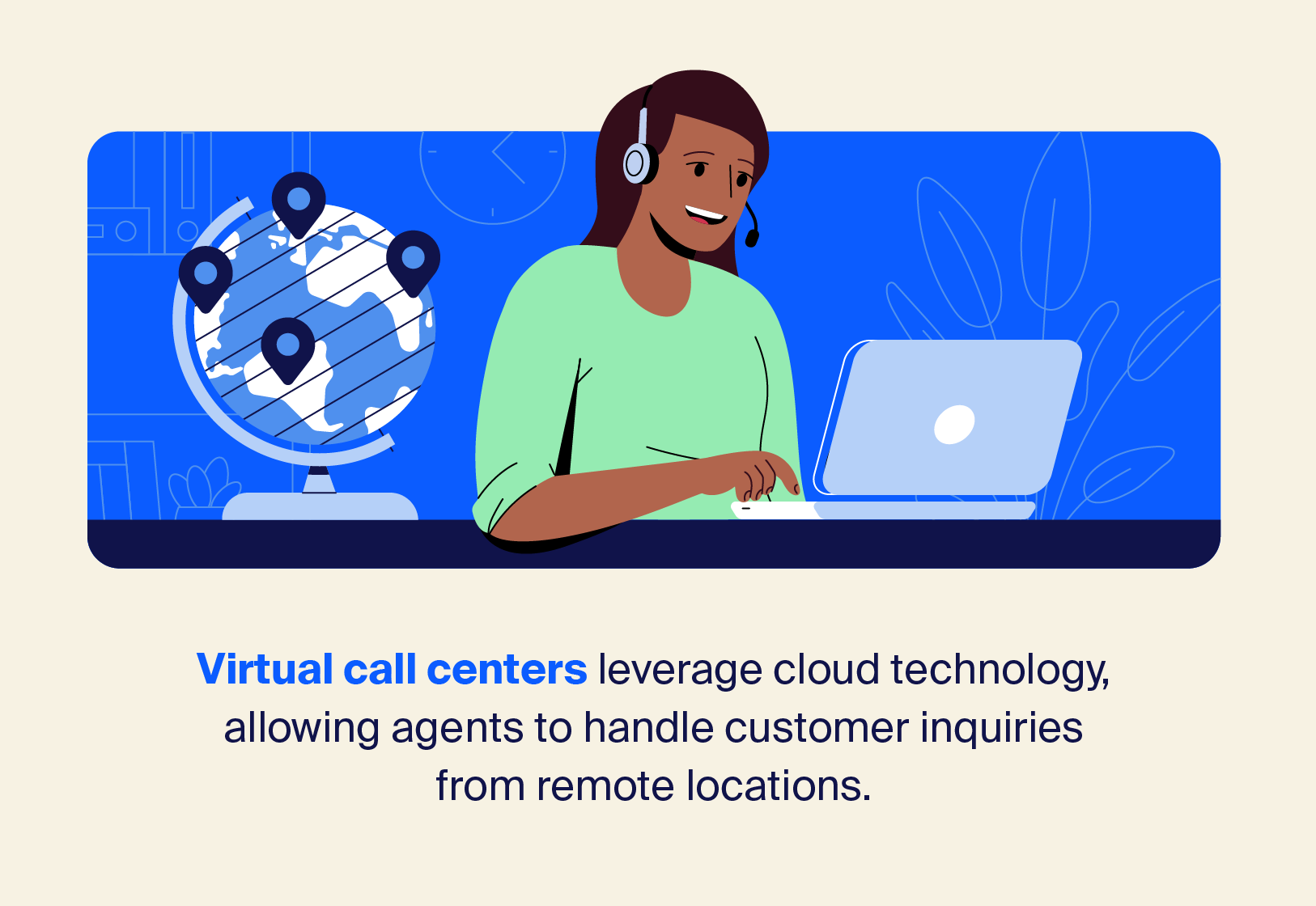
A virtual call center is a modern customer service solution that uses cloud-based technology to enable support agents to work remotely. These call centers operate entirely online, allowing agents to handle customer inquiries from anywhere with an internet connection.
Moreover, a virtual call center serves as a centralized, cloud-based communication station. In other words, you can do everything from monitoring caller sentiment to analyzing customer data in a single place, regardless of everyone’s physical location. Agents can handle calls while supervisors and managers provide coaching and workflow guidance.
Traditional call centers are physical facilities where agents work on-site to handle customer questions and concerns. These centers require significant investments in real estate, infrastructure, and on-premise hardware, and costs can quickly escalate when a call center is ready to scale.
Virtual call centers offer a compelling alternative to traditional models. They're cheaper to run because you don't need to pay for office space, equipment, or on-site IT staff. Everything happens online, so you can get started quickly without waiting for lengthy installations. This also makes it easier to handle more calls when things get busy, and you can hire top agents around the world.
With advanced call routing and automated workflows, your agents can focus on providing excellent service. This generally means happier customers and less time wasted on hold. Plus, agents are often happier because they can work from home with more flexibility.
Establishing a virtual contact center is a great way to provide excellent customer service while reducing operational costs. Follow these steps to get started:
The first step in launching a virtual contact center is laying out your business plan. This involves identifying your niche, target market, and the specific services you’ll offer.
For instance, you could specialize in inbound customer support, outbound sales, or technical support. Clearly defining your business model will help you tailor your operations, marketing strategies, and agent training to meet the unique needs of your target audience.
Once you’ve defined your business model, the next step is to research the best virtual call center phone systems. This software serves as the backbone of your operations, enabling seamless communication, efficient workflows, and valuable insights. When choosing a software solution, look for features such as:
With a solid business plan and the right technology in place, the next step is to build a skilled and motivated virtual call center team.
Start by recruiting the right talent. Identify the specific skills and experience required for your virtual call center, like excellent communication and active listening. Use online job boards, social media, and professional networking platforms to attract qualified candidates.
Once you’ve hired your team, you’ll need to develop a comprehensive training program to equip them with the necessary knowledge and skills. Provide training on your chosen software, product knowledge, customer service techniques, and communication skills.
Employee training isn’t a one-and-done step — offer ongoing learning and development opportunities to keep your team up to date with the latest industry trends and best practices.
A solid infrastructure is essential for the smooth operation of your virtual call center.
Your customers are the heart of your business. To keep them happy, you need to deliver excellent customer service. One way to do this is by using technology to understand how your customers feel.
Tools like sentiment analysis can help identify conversational patterns and potential areas for service improvement. This helps you understand what your customers like and don’t like about your service.
Another way to improve customer experience is to train your agents to be friendly, helpful, and knowledgeable. They should be able to solve customer problems quickly and efficiently. Use automated tools, such as AI-powered virtual agents, to answer common questions, reduce wait times, and free up your agents to handle more complex issues.
Finally, make sure your customers can easily contact you. Offer multiple communication channels, such as phone, email, web chat, and social media.
By focusing on these key areas, you can create a positive customer experience.
Make sure your virtual call center runs smoothly by setting clear performance goals and key performance indicators (KPIs). These metrics can help you identify areas for improvement and make data-driven decisions about your operations. Some important KPIs to track include:
By regularly tracking these metrics, you can identify trends, reward top performers, and coach agents who need improvement.
Once your virtual call center is up and running, it’s important to continually evaluate and improve its performance. Regularly review your KPIs and identify areas for improvement.
Consider using customer feedback surveys to gather insights into your customers’ experiences. This feedback can help you identify pain points and areas where you can enhance your service. You can also use call monitoring and recording to analyze agent performance and identify new training opportunities.
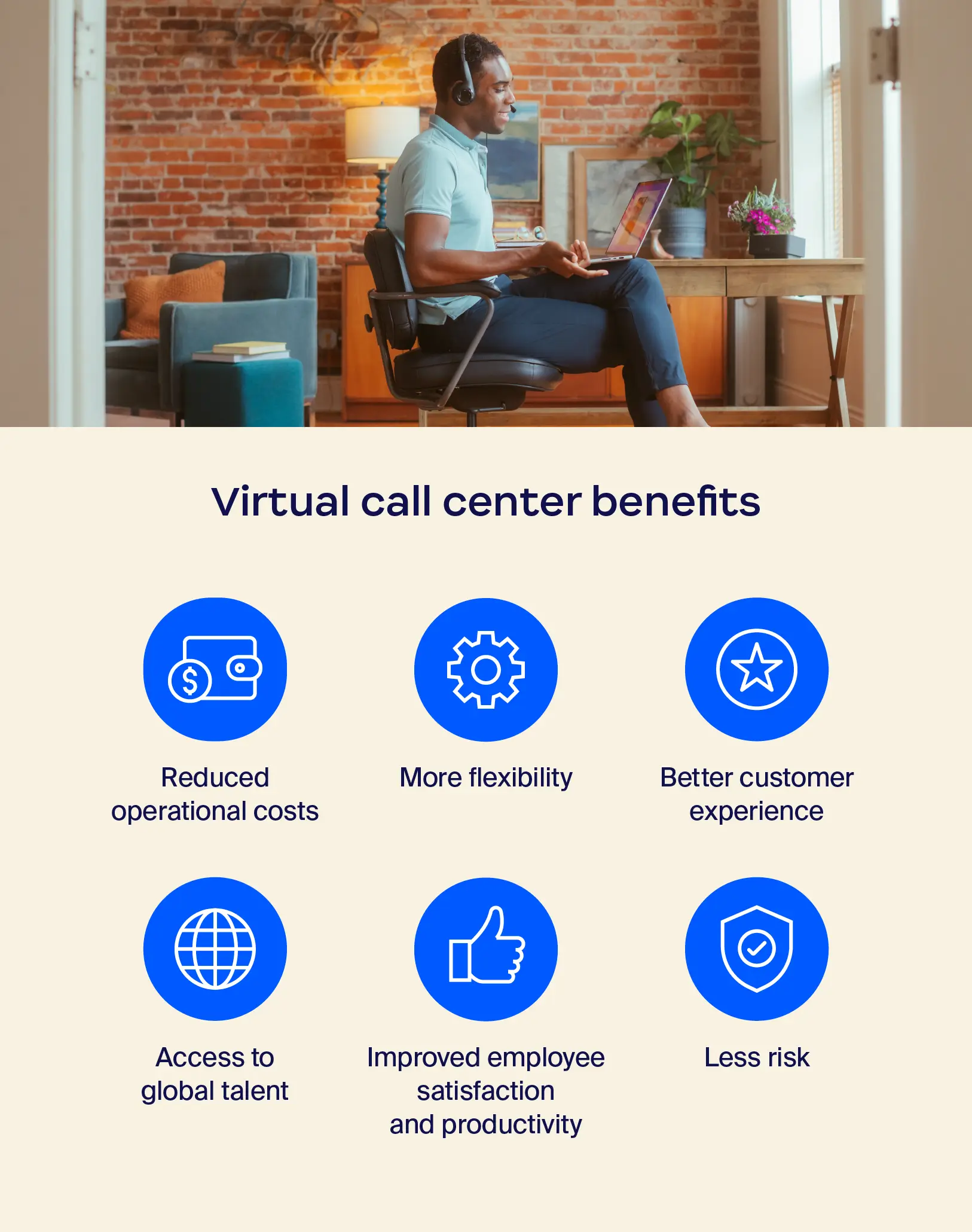
Virtual call centers offer a multitude of benefits for businesses, like:
Virtual call centers offer great scalability and flexibility, but they also pose unique management challenges. The lack of a physical office requires managers to be even more intentional about retaining visibility into agent performance and business operations while supporting the team.
Employees often appreciate the flexibility of working from home, yet 45% of those who do still report feeling burned out. This could be due to remote work enabling longer workdays or making it harder to disconnect, especially in a call center environment, when agents know quick responses and swift resolutions are crucial.
Pro tip: Set clear expectations around work hours and response times so employees don’t feel pressure to be available 24/7.
Employees in traditional, in-person call centers have ample opportunities to build relationships and engage in day-to-day water cooler chat. It can be harder to foster connections in a virtual environment, which may leave agents feeling isolated and, over time, affect their morale and engagement.
Pro tip: Provide opportunities for the team to connect via virtual meetings, informal chats, or occasional team-building activities.
Virtual call centers often have more security risks than in-office call centers. This is because virtual call centers rely on the internet and the cloud, and each employee uses remote devices from disparate locations. That’s why proper safeguards are important — make sure agents know how to handle sensitive data, protect their devices and connections, and speak up if they encounter a security problem.
Pro tip: Set up strong security protocols, such as multi-factor authentication, a passcode manager, and a secure VPN. Additionally, keep agents trained on cybersecurity best practices.
When teams work in person, managers can often simply look over and see what’s going on or overhear agents’ calls. Virtual work makes this impossible, so leaders have to be more intentional about gaining visibility. They often rely on dashboards that show metrics like call time or resolution rates, but while these are valuable, they don’t give the full picture of agent performance.
Pro tip: Continue to leverage dashboard metrics, but combine them with regular team meetings and check-ins with each agent. You can also implement quality assurance tools and call monitoring to gain even deeper insight.
Choosing the right remote call center software can determine the success of your business. Consider these key factors when making your decision:
Choosing a virtual call center system involves carefully reviewing pricing and contract terms. It’s important to understand the pricing structure, including any hidden fees or additional charges.
Lower upfront costs may be tempting, but consider the long-term value and any hidden expenses. Read the contract to be sure you understand the service level agreements (SLAs), termination clauses, and dispute resolution processes. If your agreement requires signatures from multiple cross-location stakeholders, an online notary can speed up the process and support compliance.
A well-drafted contract can protect your business interests and provide peace of mind. By thoroughly reviewing contract terms, you can select a provider that offers the best value for your money.
Choosing virtual call center software with a proven track record of excellent customer service is essential not only for your customers but also for your agents. A good provider offers dedicated support to your agents so they have the tools and resources they need to succeed. This includes prompt technical support, access to training materials, and guidance from experienced professionals.
Research the software provider’s reputation by reading online reviews, checking customer testimonials, and contacting current or past clients. Look for providers that prioritize agent satisfaction and offer comprehensive training resources.
Virtual call center software with a user-friendly interface and intuitive features can boost agent productivity and customer satisfaction. A well-designed platform can save your agents time and effort, allowing them to focus on providing excellent customer service. Look for features that automate routine tasks, such as automatic call recording and call routing.
Additionally, look for providers that offer AI-driven features. These tools can provide agents with real-time assistance, such as next-best action recommendations, surfacing accurate knowledge base articles, transcribing calls, and analyzing customer sentiment.
Customer data is sensitive, and protecting it from unauthorized access and breaches should be a top priority. Look for providers that follow industry-standard security practices, such as data encryption, secure transmission, and regular security audits.
You should also confirm that your provider offers features and controls intended to support customers’ compliance efforts related to GDPR and CCPA.
By following these steps and carefully selecting the right technology and team, you can establish a successful virtual call center to elevate customer service and drive business growth.
With cloud-based technology, real-time assistance, and virtual agents, the AI-first Zoom Contact Center makes it easy to deliver seamless customer care from anywhere in the world. Request a demo today and take the first step toward transforming your customer service operations.
A virtual call center can help minimize the need for physical office space, reduce overhead costs, and increase operational efficiency for many organizations.
The flexibility and scalability of virtual call centers also allow you to adapt to changing business needs and maximize revenue.
Getting contracts for a virtual call center involves a combination of effective marketing, networking, and sales strategies:
You can also partner with a business process outsourcing (BPO) agency to help you acquire clients and manage your operations. BPO agencies have established relationships with businesses and can connect you with potential clients.
The cost of starting a virtual call center varies based on factors such as your team size, the technology you choose, and the services you offer.
You can expect initial costs for software licenses, hardware, and training. Ongoing costs include agent salaries, software subscriptions, and operational expenses like internet and utilities. Create a detailed budget to accurately estimate your startup and ongoing costs.
When selecting a virtual call center software in 2026, consider your business size, existing support channels, and any integration requirements. Many companies use cloud-based contact center platforms that integrate voice, messaging, AI, and analytics into a single system. A standout option is Zoom Contact Center, which brings together multiple communication channels within a single platform, along with robust AI features such as AI-powered analytics and virtual agents to help your business achieve quick resolutions and strong customer satisfaction.